Contents
- Instructional Coaching, Subject Support Educator Development
- Education Leadership, Program Operations Records
- Digital Learning, LMS EdTech Implementation
- Customer Success, Support Commercial Education
- Workplace Learning, Employee Training Talent Development
- Jobs for Former Teachers That Take Your Skills Further
The old ‘those who can’t do, teach’ line can make finding jobs for former teachers feel like an unscalable mountain. Good news is, that saying isn’t worth SQUAT. Teachers have wildly valuable skills that travel far further than the four walls of the traditional classroom. Part 1 of this two-part job series focused on roles that kept you close to the learner. In Part 2, we’re stepping back to show how your classroom skills open doors in rooms MANY teachers don’t even know they’re qualified to enter.
The best jobs for former teachers aren’t always the ones closest to a classroom. Sometimes, the best move is stepping back far enough to shape the systems around them.
Teaching gives you a front-row seat to how real people work under real conditions. The messy version, where motivation shifts, instructions get misunderstood, confidence wobbles, and progress depends on whether the person leading the room can spot the reality moving it.
The professional judgment you built on the classroom floor has value way beyond the four walls surrounding it. And that unlocks opportunities beyond the student-facing roles most teachers already know to look for.
Let me be clear: the classroom is NOT the only place that needs what you have.
Part 1 of this two-part job series was all about the roles that kept you running parallel with your K12 learners. In Part 2, we’re decoupling to see the roles that’ll have you shaping the systems at large.
Is the classroom not calling you like it used to? Here are 50 jobs for former teachers that turn your classroom-built skills onto system-shaping work.
Looking for roles that keep you close to your learners? Don't forget to check out Part 1.
Instructional Coaching, Subject Support & Educator Development

Teachers who have lived on the front line understand the job in a way theory alone can't reach. They know the pace, the pressure, the trade-offs, and the moments where better support would make life easier for teachers and students.
Instructional coaching, subject support, and educator development roles use that experience to help other educators improve their craft. The work might involve coaching, subject guidance, professional development, or training those on the ground floor.
The teacher-owned advantage is practical empathy. You know what teachers are up against, and you know which advice will survive first contact with the classroom.
This group fits teachers who want to make education better by empowering the people doing the work.
#52 Educational Specialist
Average Salary (US): $60,000 - $120,000 USD/yr
Schools need people who can see both the learner's needs and the instructional move that would help. That takes experience, pattern recognition, and the confidence to make practical recommendations.
An Educational Specialist applies deep subject expertise to make 'better learning' less abstract and more achievable.
This fits teachers who have built strong judgment on the ground and want to use it to help other educators, teams, or programs make smarter decisions for students.
What you'll do:
- Apply subject or instructional expertise to improve programs, materials, or learner support.
- Advise educators, teams, or families on practical strategies that strengthen learning.
- Review student needs and recommend interventions, resources, or instructional adjustments.
What you need:
- Strong teaching experience and deep instructional judgment.
- Ability to diagnose learning problems and recommend practical improvements.
- Confidence communicating expertise without turning support into jargon.
#53 Math Subject Matter Expert
Average Salary (US): $100,000 USD/yr
Math is one of those subjects that's highly sensitive to weak design. If the concept, language, practice, or pacing is off, students feel it fast.
A Math Subject Matter Expert helps strengthen the way math is taught, explained, assessed, or built into learning materials.
This suits teachers with deep expertise in how students think through numbers, where misconceptions take root, and how 'not being a math person' is more an instructional issue than a student one.
What you'll do:
- Review or create math content for accuracy, clarity, grade-level fit, and conceptual depth.
- Identify misconceptions, weak explanations, or missing practice in learning materials.
- Support curriculum, assessment, or product teams with expert math guidance.
What you need:
- Strong math teaching experience or advanced math content expertise.
- Ability to clearly explain mathematical thinking beyond the basic process.
- Understanding of common student misconceptions and how strong instruction addresses them.
#54 Instructional Coordinator
Average Salary (US): $44,000 - $65,000 USD/yr
Good instruction takes coordination. Teachers need strong materials, clear expectations, useful training, and lesson plans that hold together across classrooms or programs.
An Instructional Coordinator helps organise and improve that bigger instructional picture, often working across curriculum, teaching practice, and educator support.
This role fits teachers who can zoom out from the lesson, see how the pieces connect, and help learning teams work with more clarity and purpose.
What you'll do:
- Coordinate curriculum, instructional practices, educator support, and learning improvement.
- Review teaching materials, learning data, and implementation feedback across classrooms or programs.
- Help educators apply stronger instructional methods consistently.
What you need:
- Broad teaching experience and comfort working across teams.
- Ability to connect curriculum, instruction, assessment, and student outcomes.
- Strong facilitation and change-management skills.
#55 Lead Instructional Coach
Average Salary (US): $55,000 - $87,000 USD/yr
Teachers need feedback from people who understand the job in their bones. The best coaching feels practical, respectful, and grounded in what a classroom can absorb.
A Lead Instructional Coach supports educators through observation, feedback, modelling, and coaching cycles that improve teaching practice.
This is for experienced teachers who know how to challenge people without making them feel small, and who want to help other educators get better at their craft.
What you'll do:
- Observe educators, identify growth opportunities, and provide practical feedback.
- Model effective teaching strategies and lead coaching cycles for individuals or teams.
- Help shape the coaching approach, tools, and standards used across a program.
What you need:
- Significant teaching experience and credibility with educators.
- Ability to challenge practice while preserving trust.
- Strong observation, feedback, modeling, and adult-coaching skills.
#56 Literacy Specialist
Average Salary (US): $60,000 - $120,000 USD/yr
Literacy sits underneath everything. When students struggle to read, write, understand, or express ideas, the effects show up across the entire school day.
A Literacy Specialist helps strengthen reading and writing instruction through educator support, targeted guidance, and stronger literacy practices.
This fits teachers who understand how personal literacy challenges can become, and who want to help schools build the kind of support that changes what learners can access.
What you'll do:
- Support teachers or programs in strengthening reading, writing, vocabulary, and comprehension instruction.
- Review literacy data and recommend targeted support for struggling readers or writers.
- Help design literacy interventions, resources, or professional learning sessions.
What you need:
- Strong literacy instruction experience.
- Understanding of reading development, writing support, and intervention strategies.
- Ability to help educators improve literacy without overwhelming them.
#57 Teacher Trainer
Average Salary (US): $46,000 -$77,000 USD/yr
New and developing teachers need more than theory. They need practical methods, clear modelling, and someone who can translate classroom reality into usable professional growth.
A Teacher Trainer helps educators build the foundational instructional habits that shape the teacher they become.
This suits teachers who enjoy helping other adults grow and can explain the craft of teaching in a way that feels useful, honest, and immediately applicable.
What you'll do:
- Train new or developing teachers in classroom practice, lesson delivery, routines, and student support.
- Create practical training materials, model techniques, and lead skill-building sessions.
- Give feedback that helps teachers improve specific parts of their craft.
What you need:
- Strong classroom experience and ability to explain teaching practice clearly.
- Confidence facilitating adults who may be nervous, inexperienced, or resistant.
- Ability to make training immediately useful rather than theoretical.
#58 EdTech Trainer
Average Salary (US): $63,000 USD/yr
Education technology only helps when people know how to use it. A tool can have all the bells and whistles in the world and still fail in the hands of overwhelmed educators.
An EdTech Trainer helps teachers, staff, and learning teams use digital tools to overcome real challenges.
This is a strong fit for teachers who understand both classroom pressure and practical technology, and enjoy helping others make better use of the tools shaping modern education.
What you'll do:
- Train educators and staff to use learning platforms, classroom tools, or digital workflows.
- Demonstrate practical use cases that solve real teaching or learning problems.
- Create guides, workshops, and support resources that improve tool adoption.
What you need:
- Teaching experience plus comfort with education technology.
- Ability to translate technical steps into language educators can use under pressure.
- Patience helping users build confidence with unfamiliar tools.
#59 Professional Development Coordinator
Average Salary (US): $54,000 -$87,000 USD/yr
Professional development can shape real improvement when it’s planned around the needs teachers are facing. But, when it drifts, people feel the waste immediately.
A Professional Development Coordinator organises the training, resources, sessions, and follow-through that help educators keep learning and growing.
This fits teachers who understand what meaningful educator support should feel like, and who want to build professional learning that respects people’s time, pressure, and intelligence.
What you'll do:
- Plan educator training calendars, session topics, resources, facilitators, and follow-up activities.
- Gather staff needs and feedback to make professional development more relevant.
- Coordinate logistics so learning sessions run smoothly and connect to program goals.
What you need:
- Strong organization and understanding of educator development needs.
- Ability to turn staff feedback into practical training priorities.
- Comfort coordinating people, calendars, materials, and outcomes.
#60 Professional Development Facilitator
Average Salary (US): $44,000 - $67,000 USD/yr
Educators can tell when a session was built by someone who knows the room. Good facilitation makes professional learning feel relevant, practical, and worth bringing back into real work.
A Professional Development Facilitator leads sessions that help educators strengthen their practice.
This suits teachers who are confident in front of adults, skilled at reading the room, and able to turn professional learning into something people can apply today.
What you'll do:
- Lead professional learning sessions that help educators strengthen specific practices.
- Use discussion, modeling, reflection, and activities to keep adult learners engaged.
- Adjust facilitation in real time based on the needs and energy of the room.
What you need:
- Strong presentation and adult-learning facilitation skills.
- Ability to make professional learning feel practical, respectful, and immediately usable.
- Confidence reading a room of educators and adapting without losing the point.
#61 Training Facilitator
Average Salary (US): $44,000 - $65,000 USD/yr
Training works best when people leave able to do something better than when they arrived. That takes structure, clarity, energy, and enough flexibility to respond to the room.
A Training Facilitator leads active, transformational learning sessions for educators, teams, and program staff.
This role fits teachers who enjoy guiding groups, breaking down complexity, and creating the kind of adult learning experience that feels focused, useful, and easy to act on.
What you'll do:
- Facilitate structured training sessions for educators, staff, customers, or program teams.
- Break complex processes or skills into clear, active learning experiences.
- Use practice, discussion, and feedback to help participants leave able to do something better.
What you need:
- Strong group facilitation and communication skills.
- Ability to manage pacing, participation, and energy with adult learners.
- Comfort training on new systems, processes, practices, or skills.
Education Leadership, Program Operations & Records
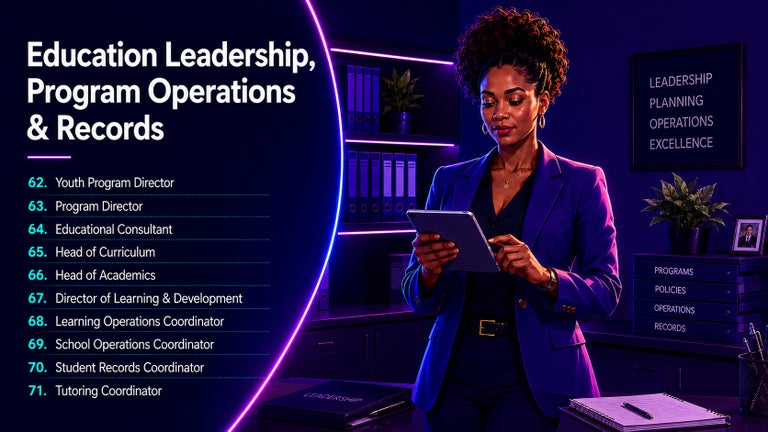
Experienced teachers know how the classroom jigs and jives because they've worked inside its moving parts. They know where the day gets blocked, where support breaks down, and where students feel the effects of weak leadership.
Education leadership, program operations, and records roles move that ground-level knowledge into the systems behind learning. The work centers on clearer programs, stronger coordination, better records, and leadership that understands the reality playing out on the ground.
These roles give teachers more time at the wheel of the system. Shifting focus from one classroom to the structures support great education.
This group fits experienced teachers who know learning works better when everyone in the system is supported by clear, insightful leadership.
#62 Youth Program Director
Average Salary (US): $51,000 - $90,000 USD/yr
Youth programs need leadership from someone who understands how to negotiate young learners, program goals, and the chaos that appears when the adults in the room aren’t aligned.
A Youth Program Director leads the people, structure, and day-to-day decisions that keep a youth program running in the right direction.
This fits teachers who know how moving parts of a program affect the student on the ground, and want more say over the environment those students grow inside of.
What you'll do:
- Lead a youth program's staff, schedule, participant experience, safety standards, and outcomes.
- Make decisions about programming, support systems, staffing, and day-to-day operations.
- Build an environment where young people can participate, grow, and stay supported.
What you need:
- Experience working with youth plus leadership or program-management ability.
- Strong judgment around student safety, staff alignment, and family communication.
- Ability to make operational decisions while keeping young learners' needs at center focus.
#63 Program Director
Average Salary (US): $62,000 - $109,000 USD/yr
Programs rise or fall on execution. The mission might be strong, but families, learners, staff, schedules, and support systems still need someone keeping the whole thing pointed true north.
A Program Director owns the big picture - making sure all the different fractions of work turn into a complete learning experience.
This suits teachers who can lead people, make decisions, and turn educational ideas into something that holds together on contact with the real world.
What you'll do:
- Own the strategy, execution, staffing, budget, and quality of an education or learning program.
- Set goals, monitor performance, and make adjustments when programs are not delivering.
- Coordinate teams and stakeholders so the whole program holds together in practice.
What you need:
- Strong leadership, planning, and decision-making skills.
- Ability to manage people, priorities, outcomes, and operational pressure.
- Experience turning an educational mission into a program that delivers.
#64 Educational Consultant
Average Salary (US): $57,000 - $101,000 USD/yr
Schools and education teams often need an outside perspective from someone who understands what happens on the ground. Advice lands better when it comes from real experience.
An Educational Consultant is an expert with the skills and capacity to help diagnose problems, recommend improvements, and guide better decisions across learning programs or entire school systems.
This is for teachers with strong judgment, clear communication, and the confidence to step into complex education problems without losing sight of the students and teachers affected by them.
What you'll do:
- Diagnose education problems for schools, programs, families, or organizations.
- Recommend improvements in curriculum development, instruction, operations, student support, or learning strategy.
- Present findings and guidance in a way clients can act on.
What you need:
- Deep education experience and a clear area of expertise.
- Strong consulting, communication, and problem-framing skills.
- Ability to give honest recommendations while staying grounded in what is realistic.
#65 Head of Curriculum
Average Salary (US): $82,000 - $132,000 USD/yr
Curriculum design decisions shape what teachers teach, what students practise, and what learning gets valued. Weak direction creates problems everyone else has to absorb.
A Head of Curriculum leads the strategy, structure, and quality of the learning content across a school or program.
This fits teachers who think deeply about what students should learn, how ideas should build, and how stronger curriculum can support everyone in doing their best work.
What you'll do:
- Lead curriculum strategy, scope, sequence, quality standards, and improvement priorities.
- Oversee curriculum teams, review materials, and ensure learning content supports program goals.
- Make decisions about what gets taught, how it builds, and how curriculum quality is measured.
What you need:
- Strong curriculum leadership and instructional-design judgment.
- Ability to manage content quality across subjects, teams, or grade levels.
- Confidence making strategic decisions that affect teachers and learners at scale.
#66 Head of Academics
Average Salary (US): $77,000 - $143,000 USD/yr
Academic quality needs someone steering the whole engine. Students, teachers, curriculum, outcomes, support, and expectations all have to work together.
A Head of Academics leads the academic direction of a school or learning program, making sure the learning model has clarity, structure, and follow-through.
This suits experienced teachers who want meaningful influence over how education works at a higher level.
What you'll do:
- Set the academic direction, standards, expectations, and learning priorities for a school or program.
- Monitor outcomes across curriculum, instruction, assessment, student support, and educator performance.
- Lead academic teams through improvement cycles when results do not match the goal.
What you need:
- Senior-level academic judgment and credibility with educators.
- Ability to connect daily learning practice with high-level academic strategy.
- Strong leadership under pressure when student outcomes are on the line.
#67 Director of Learning & Development
Average Salary (US): $96,000 - $148,000 USD/yr
Education teams need growth systems, too. Adults doing hard learning work need clear training, useful feedback, and development that helps them get better at the job.
A Director of Learning & Development builds the systems that help educators, coaches, or staff strengthen their practice.
This fits teachers who care about improving the people side of education and want to create the conditions where teams keep growing in the right direction.
What you'll do:
- Build learning strategies that help educators, staff, or employees grow over time.
- Oversee training programs, development pathways, learning resources, and performance support.
- Measure whether development efforts are improving capability, confidence, and results.
What you need:
- Strong adult-learning and talent-development judgment.
- Ability to connect professional growth with organizational performance.
- Leadership experience managing learning programs, vendors, facilitators, or internal teams.
#68 Learning Operations Coordinator
Average Salary (US): $100,000 - $200,000 USD/yr
Learning can break down through small operational failures: unclear schedules, missing handoffs, weak routines, or support that arrives too late.
A Learning Operations Coordinator keeps the behind-the-scenes work organised so programs run more smoothly for students and staff.
This is a strong match for teachers who notice friction in the system early and want to improve the flow of learning from the operations side.
What you'll do:
- Coordinate learning schedules, systems, communications, resources, and support workflows.
- Keep programs running smoothly by managing handoffs between learners, staff, facilitators, and tools.
- Track operational issues and improve the processes that affect the learning experience.
What you need:
- Strong organization and comfort managing moving parts.
- Ability to see where operational friction is slowing learning down.
- Clear communication with learners, staff, and program leaders.
#69 School Operations Coordinator
Average Salary (US): $110,000 USD/yr
Schools depend on hundreds of small decisions holding together across the day. When operations drift, teachers and students feel it.
A School Operations Coordinator supports the systems, schedules, communication, and routines that keep the whole school environment steady.
This suits teachers who understand the daily rhythm of school life and want to help build a setting where the work feels clearer, calmer, and better supported.
What you'll do:
- Support the daily operations of a school, including schedules, routines, communication, supplies, and campus workflows.
- Help staff, students, and families get the information and support they need during the school day.
- Improve systems that make the school environment calmer, clearer, and more reliable.
What you need:
- Strong understanding of school rhythms and operational pressure points.
- Practical problem-solving skills and calm follow-through.
- Ability to support adults and students without losing track of the details.
#70 Student Records Coordinator
Average Salary (US): $35,000 - $50,000 USD/yr
Student records may look administrative from the outside, but they carry real consequences. Placement, progress, services, graduation, and family decisions all depend on information being accurate and accessible.
A Student Records Coordinator manages the data and documentation that help schools understand and support their learners.
This fits teachers who are detail-focused, careful, and aware that strong systems protect students from avoidable confusion, missed support, and lost opportunity.
What you'll do:
- Maintain student records, transcripts, enrollment data, attendance, documentation, or compliance files.
- Check records for accuracy and resolve missing or conflicting information.
- Protect sensitive student information while making sure teams have the data they need.
What you need:
- Excellent attention to detail and respect for confidentiality.
- Comfort working with student information systems, spreadsheets, or records platforms.
- Ability to understand how accurate records affect student support and opportunity.
#71 Tutoring Coordinator
Average Salary (US): $43,000 - $71,000 USD/yr
Tutoring works best when the right learner gets the right support at the right time. That takes more than matching names on a schedule.
A Tutoring Coordinator organises tutors, students, sessions, progress tracking, and support plans so intervention work stays impactful.
This fits teachers who understand skill gaps, learner confidence, and the logistics needed to turn extra help into measurable progress.
What you'll do:
- Match students with tutors based on subject need, schedule, learning goals, and support level.
- Track tutoring attendance, progress, feedback, and intervention effectiveness.
- Support tutors with expectations, resources, and communication so sessions stay useful.
What you need:
- Strong understanding of academic gaps and intervention support.
- Ability to coordinate people, schedules, and progress data.
- Communication skills that keep students, tutors, and families aligned.
Digital Learning, LMS & EdTech Implementation

A special few understand both sides of the education problem: what learners and teachers need, and how technology can help rebuild the systems around them.
Digital learning, LMS, and EdTech implementation roles are for technical educators who want hands-on work with the tools pulling traditional education forward. These jobs sit where platforms, online learning, accessibility, implementation, and classroom reality meet.
The teacher-owned advantage is practical technical judgment. You know what the tool is supposed to do, what the classroom needs, and where a rollout will break if nobody with education experience is in the room.
This group fits technical minded teachers who want to get their hands dirty on the tech layer of better learning.
#72 Digital Learning Specialist
Average Salary (US): $62,000 - $111,000 USD/yr
Digital learning succeeds when the tool supports the learning instead of getting in the learner’s way. Teachers know how fast a clunky platform can drain focus from even the best-planned lesson.
A Digital Learning Specialist helps schools and programs make online learning more usable, structured, and learner-friendly.
This fits teachers who understand classroom reality and want to work on the digital systems shaping how modern students now learn.
What you'll do:
- Improve online learning experiences by shaping digital content, platform use, and learner support.
- Help educators and students use digital learning tools with more confidence and less friction.
- Review learner feedback or usage data to improve digital learning design.
What you need:
- Teaching experience plus comfort with online learning environments.
- Ability to connect digital tools to real learning needs.
- Strong communication with educators, learners, and technical teams.
#73 Educational Technology Specialist
Average Salary (US): $62,000 - $101,000 USD/yr
Education technology creates real value when someone with learning experience is helping choose, shape, and support it. Without that judgment, tools usually create more work for everyone in the room.
An Educational Technology Specialist helps schools choose and apply the technology they need.
This suits teachers who are comfortable with tech and want to help educators use better tools in better ways.
What you'll do:
- Help schools select, configure, and use education technology that matches instructional needs.
- Support teachers with tool setup, classroom workflows, and practical use cases.
- Evaluate whether technology is improving learning or simply adding work.
What you need:
- Strong classroom experience and technical confidence.
- Ability to advise on tool choice and implementation from an educator's perspective.
- Patience training staff with different comfort levels around technology.
#74 eLearning Developer
Average Salary (US): $64,000 - $101,000 USD/yr
Online learning can fall flat fast. Good digital learning needs structure, interaction, and a clear path through the material.
An eLearning Developer builds digital courses and learning assets that students can move through without introducing the tyranny of distance.
This is for teachers who enjoy creating learning experiences and want to turn that skill into hands-on digital production work.
What you'll do:
- Build digital courses, interactive modules, videos, quizzes, and online learning assets.
- Use authoring tools or LMS platforms to turn content into structured eLearning experiences.
- Test digital materials to make sure learners can move through them cleanly.
What you need:
- Strong instructional content skills and willingness to use eLearning tools.
- Comfort with digital production, layout, media, or interactive learning elements.
- Ability to make online learning clear without relying on live teacher explanation.
#75 Blended Learning Specialist
Average Salary (US): $55,000 - $90,000 USD/yr
Blended learning asks teachers and students to move between physical and digital spaces without losing rhythm. When that bridge is weak, the learning feels fragmented.
A Blended Learning Specialist helps design learning models where classroom time and online work support each other properly.
This fits teachers who understand both live instruction and digital learning, and want to help schools make the mix feel intentional, useful, and manageable.
What you'll do:
- Design models that connect in-person instruction with online practice, support, and assessment.
- Help educators decide what belongs live, what belongs online, and how the two should reinforce each other.
- Monitor whether blended routines are improving learning or creating confusion.
What you need:
- Experience with both classroom instruction and digital learning tools.
- Strong judgment around pacing, routines, and learner independence.
- Ability to help schools make blended learning manageable for teachers and students.
#76 Instructional Technologist
Average Salary (US): $52,000 - $91,000 USD/yr
Technology can change how teachers plan, how students practise, and how support gets delivered.
An Instructional Technologist helps connect instructional goals with the right technology choices and learning workflows.
This suits teachers who like solving practical problems and want to sit at the point where teaching, systems, and technical judgment meet.
What you'll do:
- Match instructional goals with technology tools, workflows, integrations, and learning systems.
- Support teachers or teams in designing tech-enabled learning activities.
- Troubleshoot instructional technology problems that affect teaching, access, or learner progress.
What you need:
- Strong mix of teaching knowledge and technical problem-solving.
- Ability to translate between educators and technology teams.
- Comfort testing tools, documenting workflows, and improving digital learning processes.
#77 LMS Administrator
Average Salary (US): $55,000 - $84,000 USD/yr
A great LMS is the backbone of modern education. A bad one will derail the classroom.
An LMS Administrator keeps that system clean, organised, and usable for the people relying on it.
This fits teachers who are detail-focused, technically confident, and interested in making the digital learning environment work better from behind the scenes.
What you'll do:
- Manage users, courses, permissions, reporting, content uploads, and system settings inside an LMS.
- Troubleshoot access issues, course setup problems, and platform workflows.
- Keep the LMS clean and usable for learners, teachers, and administrators.
What you need:
- Strong systems organization and attention to detail.
- Comfort learning platform administration tools and user-management workflows.
- Ability to support non-technical users without making the system feel more intimidating.
#78 LMS Coordinator
Average Salary (US): $46,000 - $69,000 USD/yr
Learning platforms need more than setup. They need someone keeping people, content, timing, and support jigging and jiving in perpetuity.
An LMS Coordinator helps manage the day-to-day flow of digital learning so students and educators can access what they need, when they need it, without friction.
This is a strong match for teachers who are organised, responsive, and good at helping others work confidently inside a shared system.
What you'll do:
- Coordinate course launches, content updates, learner communications, and LMS support requests.
- Help educators and students find materials, understand deadlines, and use the platform correctly.
- Track recurring LMS issues and improve support processes over time.
What you need:
- Strong coordination skills and comfort working inside shared systems.
- Ability to manage content, calendars, support tickets, and user questions.
- Clear communication for helping people use the LMS confidently day to day.
#79 Learning Content Accessibility Specialist
Average Salary (US): $43,000 - 74,000 USD/yr
Accessible learning content matters because every student deserves a fair way into the material. Design choices around text, structure, navigation, and media can either open the door or make learning harder.
A Learning Content Accessibility Specialist reviews and improves digital materials so can access exactly what they need in the way they need.
This suits teachers who care about fairness, precision, and the technical details that decide whether learning is genuinely reachable.
What you'll do:
- Review digital learning materials for accessibility issues in text, structure, navigation, media, and formatting.
- Recommend or make changes that help more learners access content fairly.
- Support teams in following accessibility standards and inclusive design.
What you need:
- Strong attention to detail and commitment to learner access.
- Familiarity with accessibility principles or willingness to upskill quickly.
- Ability to spot where design choices create avoidable barriers.
#80 EdTech Implementation Specialist
Average Salary (US): $75,000 - $112,000 USD/yr
A strong education tool can still fail during rollout. Teachers, students, leaders, and families need clear setup, useful training, and support that matches the needs of the classroom.
An EdTech Implementation Specialist helps schools bring new tools into use with less confusion and stronger buy-in.
This fits teachers who understand both the classroom and the system, and want hands-on work making better technology deliver on its promise.
What you'll do:
- Plan and support the rollout of new EdTech tools across schools, teams, or programs.
- Train users, document workflows, troubleshoot launch issues, and support adoption.
- Work with stakeholders to make implementation fit the reality of the learning environment.
What you need:
- Strong project management and EdTech experience.
- Ability to manage change without ignoring teacher or student friction.
- Comfort working with vendors, school teams, timelines, and user feedback.
#81 EdTech Solutions Consultant
Average Salary (US): $82,000 - $133,000 USD/yr
Schools need help finding tools that fit their problems. The wrong solution can waste money, frustrate teachers, and leave learners no better supported than before.
An EdTech Solutions Consultant helps education teams understand, choose, and apply technology in ways that serve real learning needs.
This is for teachers who can translate classroom experience into smart technical guidance and enjoy solving education problems at the product-and-systems level.
What you'll do:
- Understand a school's learning or operational problem and recommend the right technology solution.
- Demonstrate product use cases in language educators and decision-makers understand.
- Advise customers on how to apply tools in ways that support real learning outcomes.
What you need:
- Strong education insight and commercial or consultative communication skills.
- Ability to connect product features to practical school needs.
- Confidence guiding decisions without turning every conversation into a sales pitch.
Customer Success, Support & Commercial Education

Teachers know the world's education products are trying to enter. They understand the people, pressure, habits, and needs that shape whether a product lives or dies.
Customer success, support, and commercial education roles turn that insider knowledge into a bridge between products and users. With this work centering on adoption, guidance, partnerships, outreach, and product education.
The teacher-owned advantage is credibility backed by lived experience. You can explain the product, support the user, and spot the gap between what the tool promises and what the customer needs.
This group fits teachers who want to stay connected to education while moving closer to the business that powers learning.
#82 Customer Education Specialist
Average Salary (US): $46,000 - $69,000 USD/yr
Education products only work when people understand how to use them. A great tool can still be a burden when the user is tired, busy, or unsure where to start.
A Customer Education Specialist creates learning experiences that help customers understand a product and get the value they need from it.
This fits teachers who enjoy clear communication, breaking complexity into manageable chunks, and shaping low-friction application, so products can perform to their potential.
What you'll do:
- Create tutorials, guides, webinars, help content, or learning paths that teach customers how to use a product.
- Identify where users get stuck and build education resources that reduce confusion.
- Partner with product, support, or success teams to improve customer learning.
What you need:
- Strong instructional writing and customer empathy.
- Ability to teach product use clearly without assuming prior knowledge.
- Comfort turning repeated support questions into scalable education materials.
#83 EdTech Customer Success Manager
Average Salary (US): $68,000 - $112,000 USD/yr
Schools don’t adopt products in a vacuum. Every tool has to survive budgets, staff habits, student needs, leadership expectations, and the daily pressure of education.
A Customer Success Manager in EdTech helps schools and organizations keep getting value from the product they’ve chosen.
This suits teachers who know the education world from the inside and want to help customers turn product use into stronger learning support.
What you'll do:
- Own relationships with school or organization customers after purchase.
- Help customers set goals, adopt the product, review usage, and renew successfully.
- Identify risks when implementation stalls and guide customers back toward value.
What you need:
- Strong relationship management and education-sector credibility.
- Ability to connect product adoption to customer goals and learner outcomes.
- Comfort with account planning, usage data, renewals, and stakeholder conversations.
#84 EdTech Customer Success Specialist
Average Salary (US): $45,000 - $75,000 USD/yr
Product adoption is full of small moments where people either build confidence or start pulling away. In education, those moments matter because busy teams have limited patience for tools that feel hard to use.
A Customer Success Specialist helps EdTech customers stay supported, informed, and moving towards positive implementation.
This fits teachers who like practical problem-solving and want a customer-facing role with education still at the centre.
What you'll do:
- Support customers through onboarding, check-ins, usage questions, and adoption milestones.
- Help users understand product features and apply them to their workflow.
- Escalate customer concerns and share feedback with product or support teams.
What you need:
- Strong practical problem-solving and customer communication.
- Ability to support multiple users without losing warmth or accuracy.
- Comfort using CRM, support, or customer-success tools.
#85 EdTech Customer Support Specialist
Average Salary (US): $41,000 - $76,000 USD/yr
When an education tool causes confusion, users need help from someone who understands the pressure behind the question. A teacher trying to solve a problem mid-day doesn't want corporate support.
A Customer Support Specialist helps users resolve product issues, so learning can keep moving.
This is for teachers who are patient, clear, and good at helping people feel less stuck when the system isn’t behaving.
What you'll do:
- Respond to user questions about product access, features, errors, accounts, or workflows.
- Resolve common issues quickly so educators and learners can keep working.
- Document support patterns and help improve help-center resources or internal processes.
What you need:
- Patience, clarity, and strong written support skills.
- Ability to troubleshoot user problems without sounding robotic.
- Understanding of how product issues affect live education.
#86 EdTech Technical Support Specialist
Average Salary (US): $55,000 USD/yr
Technical support in education needs more than scripted answers. Users are often trying to fix a problem that affects a class, a learner, or a program in motion.
A Technical Support Specialist helps solve LMS or EdTech problems with enough technical skill to keep the learning environment stable, but enough teacher knowledge to keep things accessible.
This suits teachers who enjoy troubleshooting and can translate technical steps into language real educators can follow while under a crunch.
What you'll do:
- Troubleshoot technical issues involving LMS platforms, integrations, user access, devices, or data flows.
- Translate technical fixes into clear instructions for educators, learners, or administrators.
- Escalate complex bugs with enough detail for engineering or product teams to act.
What you need:
- Strong technical curiosity and comfort diagnosing platform problems.
- Ability to communicate technical steps to non-technical users.
- Calm judgment when technical issues disrupt learning in real time.
#87 Education Sales Consultant
Average Salary (US): $64,000 - $101,000 USD/yr
Education buyers need more than a polished pitch. They need someone who understands their world, asks better questions, and can connect a product to the problem they’re trying to solve.
An Education Sales Consultant helps schools and organizations understand whether a product fits their learning needs.
This fits teachers who can communicate with confidence, understand education decision-making, and want to apply their on-the-ground experience in a commercial role.
What you'll do:
- Speak with schools, families, or organizations to understand their learning needs.
- Present education products or services in ways that connect to real use cases.
- Guide prospects through evaluation, objections, pricing questions, and decision steps.
What you need:
- Strong consultative communication and confidence discussing value.
- Ability to use education experience as credibility, not as a lecture.
- Comfort with targets, follow-up, CRM tracking, and commercial conversations.
#88 School Partnerships Manager
Average Salary (US): $70,000 - $113,000 USD/yr
Strong education partnerships depend on trust. Schools need partners who understand their goals, respect their constraints, and can keep the relationship useful after the first agreement is signed.
A School Partnerships Manager builds and maintains relationships between education organizations and the schools they serve.
This suits teachers who are strong relationship-builders and want to work at the point where learning goals, people, and partnership strategy meet.
What you'll do:
- Build and maintain relationships with schools, districts, or education organizations.
- Identify partnership opportunities that support program growth and school needs.
- Coordinate agreements, communication, implementation expectations, and ongoing relationship health.
What you need:
- Strong relationship-building and stakeholder-management skills.
- Ability to understand both school constraints and partner goals.
- Comfort managing strategic conversations over the long-run.
#89 Grants Coordinator
Average Salary (US): $48,000 - $68,000 USD/yr
Funding can decide whether a good education idea reaches learners at all. Strong grant work can turn a need into a clear case that funders can get behind.
A Grants Coordinator helps education organizations prepare and manage funding opportunities tied to programs, resources, or student support.
This fits analytical teachers with deep domain expertise who write clearly, think carefully, and want to help under-supported education get the resources it needs.
What you'll do:
- Research grant opportunities that match education programs, services, or student-support needs.
- Coordinate proposal materials, deadlines, budgets, narratives, and reporting requirements.
- Track grant status and help teams stay compliant after funding is awarded.
What you need:
- Strong writing, organization, and deadline management.
- Ability to turn education needs into a clear funding case.
- Comfort working with budgets, requirements, documentation, and stakeholder input.
#90 Education Partnership Coordinator
Average Salary (US): $75,000 USD/yr
Education partnerships can create real opportunity when the moving parts are handled well. But without steady coordination, even strong relationships can fall apart.
A Partnership Coordinator helps keep education partners aligned, informed, and moving toward shared goals.
This is for teachers who are organized, people-aware, and good at making collaboration feel easier for everyone involved.
What you'll do:
- Coordinate communication, meetings, deliverables, and follow-up across education partners.
- Keep partnership details organized so shared projects move forward smoothly.
- Support relationship managers or program teams with updates, materials, and tracking.
What you need:
- Strong coordination and communication habits.
- Ability to keep multiple stakeholders aligned.
- Detail discipline for timelines, notes, agreements, and next steps.
#91 Education Outreach Coordinator
Average Salary (US): $47,000 - $70,000 USD/yr
The right education opportunity still has to reach the people who need it. Outreach matters because families, schools, and communities often need a clear invitation before they engage.
An Education Outreach Coordinator helps connect programs, products, or services with the audiences they’re built to support.
This fits teachers who enjoy communication, community connection, and helping people find education options that can make a real difference in their world.
What you'll do:
- Plan outreach campaigns, school visits, community contacts, or information sessions.
- Introduce programs, products, or services to families, schools, learners, or community groups.
- Track outreach activity and follow up with people who show interest.
What you need:
- Strong communication and comfort initiating conversations.
- Ability to explain education opportunities in a way that feels useful, not pushy.
- Organization to manage contacts, events, follow-up, and outreach goals.
Workplace Learning, Employee Training & Talent Development
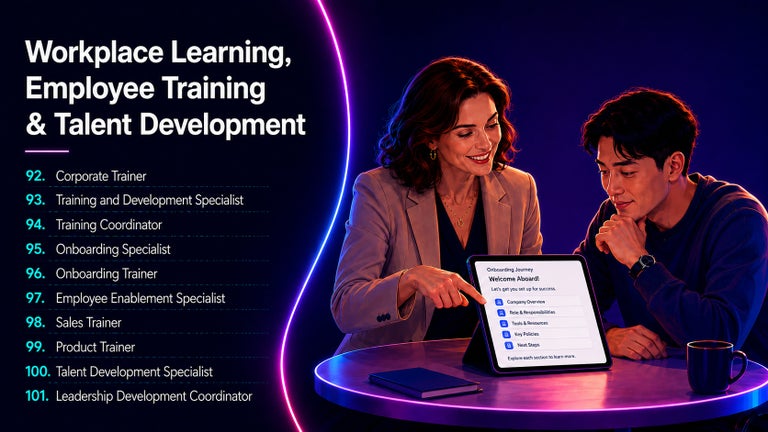
The classroom builds rare expertise in how people learn, practice, build confidence, and keep progressing when the material gets tough. Those skills stretch far beyond K12.
Workplace learning, employee training, and talent development roles take teaching skill into the professional world. The work helps adults onboard, build capability, use tools, improve performance, and keep growing in an environment that never stands still.
This path suits curious teachers who want a broader arena for their expertise. The learner changes, but the core work stays rooted in growth, clarity, feedback, and progress.
This group is for teachers ready to move beyond K12 and make their mark on the professional world.
#92 Corporate Trainer
Average Salary (US): $45,000 - $67,000 USD/yr
Workplaces need people who can teach clearly when the stakes are tied to performance, confidence, and someone’s ability to do the job well.
A Corporate Trainer helps employees build practical skills through structured training that makes expectations easier to understand and apply.
This fits teachers who are ready to bring their classroom-honed communication, pacing, and group facilitation skills into companies where better learning can change how people work.
What you'll do:
- Deliver corporate training that helps employees learn systems, processes, skills, or workplace expectations.
- Build training sessions with clear objectives, practice, examples, and follow-up.
- Adjust delivery for different teams, experience levels, and business needs.
What you need:
- Strong facilitation and communication skills.
- Ability to translate teaching methods into workplace learning.
- Comfort helping adults apply training directly to their jobs.
#93 Training and Development Specialist
Average Salary (US): $52,000 - $78,000 USD/yr
Employees are expected to keep growing while the work around them keeps changing. That growth needs structure, or people end up guessing their way through new expectations.
A Training and Development Specialist helps build learning programs that support employee performance and long-term capability.
This suits teachers who think carefully about how people improve over time, and want to apply their in-classroom expertise in a workplace setting with room to grow.
What you'll do:
- Assess employee skill gaps and design training programs to address them.
- Create learning materials, workshops, resources, and development plans.
- Evaluate whether training improves performance, confidence, or readiness.
What you need:
- Strong instructional design and adult-learning skills.
- Ability to connect training activity to workplace performance.
- Comfort working with managers, employees, feedback, and learning data.
#94 Training Coordinator
Average Salary (US): $48,000 - $70,000 USD/yr
Good training falls apart when the details aren’t handled well. Sessions need planning, people need clear information, and learning needs to reach the right employees at the right time.
A Training Coordinator keeps workplace learning organised and moving.
This is a strong fit for teachers who enjoy structure, logistics, and making sure the learning experience feels smooth for the people relying on it.
What you'll do:
- Schedule training sessions, manage attendance, prepare materials, and coordinate facilitators.
- Communicate training details clearly to employees and managers.
- Track completion, feedback, and logistics so training runs without avoidable friction.
What you need:
- Strong organization and deadline management.
- Ability to handle logistics without losing sight of learner experience.
- Comfort using calendars, spreadsheets, learning management systems, or HR systems.
#95 Onboarding Specialist
Average Salary (US): $43,000 - $65,000 USD/yr
A new job can make even capable people feel disoriented. The first few weeks shape confidence, belonging, and how quickly someone can start doing useful work.
An Onboarding Specialist helps new employees understand the role, the company, and the path to becoming productive.
This fits teachers who are good at welcoming people into unfamiliar environments and turning a messy beginning into something clear, steady, and encouraging.
What you'll do:
- Guide new employees through orientation, first-week expectations, company basics, and role setup.
- Coordinate documents, introductions, training steps, and early support needs.
- Improve the onboarding experience so new hires feel clear, welcomed, and ready to contribute.
What you need:
- Strong communication and ability to make new people feel grounded.
- Organization for managing many small but important onboarding steps.
- Understanding of how early learning affects confidence and performance.
#96 Onboarding Trainer
Average Salary (US): $44,000 - $72,000 USD/yr
New employees need early learning that respects how much they’re trying to absorb. Too much information, too fast, can leave people overwhelmed before they’ve even started.
An Onboarding Trainer is a hands-on role that teaches the core knowledge, habits, and workflows employees need on day one.
This suits teachers who can pace learning, clearly explain expectations, and help adults build confidence while they’re still finding their feet.
What you'll do:
- Teach new employees the tools, workflows, policies, and habits they need in the role.
- Pace early training so new hires can absorb information without drowning in it.
- Use practice, examples, and feedback to help employees become productive faster.
What you need:
- Strong instructional delivery for adult beginners.
- Ability to break role knowledge into clear day-one and week-one priorities.
- Patience helping new employees build confidence while they are still overloaded.
#97 Employee Enablement Specialist
Average Salary (US): $62,000 - $99,000 USD/yr
Employees often know what they’re trying to achieve, but lack the right support to do it consistently. That gap can slow down great talent.
An Employee Enablement Specialist helps people use the tools, knowledge, and processes that make better work possible.
This fits teachers who enjoy removing friction from learning and helping people become more capable inside the systems they use every day.
What you'll do:
- Build resources, playbooks, training, and support systems that help employees do better work.
- Identify friction in tools, processes, or knowledge access and create ways to reduce it.
- Partner with teams to make information easier to find, understand, and use.
What you need:
- Strong process thinking and employee-support instincts.
- Ability to turn scattered knowledge into practical enablement resources.
- Comfort working across teams, tools, documentation, and performance needs.
#98 Sales Trainer
Average Salary (US): $57,000 - $91,000 USD/yr
Sales teams need training that holds up in real conversations with real buyers. Scripts alone won’t carry someone through pressure or a messy customer need.
A Sales Trainer helps salespeople build the skills and confidence to communicate value clearly.
This suits teachers who can break down complex ideas, coach performance, and help adults practise until the skill becomes usable under pressure.
What you'll do:
- Train sales teams on messaging, product knowledge, discovery questions, objection handling, and buyer conversations.
- Run role plays, call reviews, coaching sessions, or practice exercises.
- Help salespeople turn scripts and frameworks into confident real-world conversations.
What you need:
- Strong facilitation and performance-coaching skills.
- Ability to understand buyer psychology and clearly explain value.
- Comfort giving direct feedback that improves sales behavior.
#99 Product Trainer
Average Salary (US): $58,000 - $95,000 USD/yr
A product can be powerful and still feel confusing if people don’t understand how to use it. Good product training helps users and teams move from feature awareness to confident application.
A Product Trainer teaches people how a product works and why it matters in their daily work.
This fits teachers who enjoy making complex systems understandable and helping adults turn new knowledge into something immediately useful.
What you'll do:
- Teach employees, customers, or partners how to use a product effectively.
- Build demos, workshops, guides, and practice activities around real product workflows.
- Translate product complexity into clear use cases people can immediately apply.
What you need:
- Strong product-learning and explanation skills.
- Ability to make features meaningful in the context of daily work.
- Comfort learning software or systems quickly enough to teach them well.
#100 Talent Development Specialist
Average Salary (US): $47,000 - $68,000 USD/yr
People don’t grow by accident. They need feedback, stretch, support, and learning paths that help them move toward the next version of their career.
A Talent Development Specialist helps employees build skills that support growth, performance, and future opportunity.
This is for teachers who care about long-term development and want to help adults keep progressing in a world that never stands still.
What you'll do:
- Help employees build skills through coaching, learning paths, development programs, or performance support.
- Coordinate growth plans tied to role expectations, career goals, and organizational needs.
- Measure progress and adjust development support as employees grow.
What you need:
- Strong coaching and long-term development mindset.
- Ability to connect individual growth with business needs.
- Comfort working with managers, employees, feedback, and development frameworks.
#101 Leadership Development Coordinator
Average Salary (US): $43,000 - $65,000 USD/yr
Strong leaders shape the daily experience of everyone around them. When leadership is underdeveloped, teams feel the drag through unclear expectations, weak feedback, and poor decision-making.
A Leadership Development Coordinator supports programs that help current and future leaders grow.
This fits teachers who understand how people learn responsibility over time and want to help adults build the leadership habits that make work better for everyone.
What you'll do:
- Coordinate programs that help current and future leaders build stronger management habits.
- Support leadership workshops, coaching cycles, resources, assessments, and participant communication.
- Track participation and feedback so leadership development keeps improving.
What you need:
- Strong organization and interest in how adults grow into responsibility.
- Ability to support leadership learning without turning it into corporate theater.
- Comfort working with managers, facilitators, calendars, materials, and confidential feedback.
Jobs for Former Teachers That Take Your Skills Further
Leaving your traditional teacher role does not have to mean leaving the learner behind. But stepping further back does not mean stepping away from impact, either.
That’s the framing behind these 50 roles.
Where Part 1 was about staying close to the student-centred mission, Part 2 is all about moving upstream, into the work that shapes what learners, educators, employees, and customers experience next.
That frame matters because teaching is capability work.
You spent your classroom years helping people move from confusion to understanding, from hesitation to action, from shaky first attempts to real competence. That experience travels because schools AND businesses both need people who can build the conditions where others get better at what they do.
Your next role might not have ‘teacher’ in the title. But if the work is responsible for building capability, your teaching experience has a role to play.
Same teacher skills. Different rooms.
Looking for jobs for former teachers and don’t want to go back to the traditional classroom? Your transferable skills travel further than the titles you’ve been taught to look for.
Similar post


Want to read more?
We have a lot more where that came from


 AI-first education leaders.