![The Official Shadow Day Guide [The Offline Assessment]](https://assets-us-01.kc-usercontent.com:443/7beb5311-75a4-0049-50f5-8f58fd55aba7/043548c8-3bd8-4fb4-984b-cef9f8506f57/Greg_Header.jpg?fm=jpg&auto=format&w=800&h=500&fit=clip)
Contents
- 1. What is a Shadow Day?
- 2. Who is a Shadow Day For?
- 3. What is The Crossover Offline Assessment?
- 4. What is The Final Check Stage (Pre-Shadow Day)?
- 5. Where Does the Shadow Day Happen?
- 6. When Does the Shadow Day Happen?
- 7. How Does Travel and Reimbursement Work?
- 8. Will You Spend Time with Students?
- 9. Will You Meet School Leaders Campus Team Members?
- 10. What Should You Expect on The Day?
- 11. Will You Need to Prepare Anything?
- 12. What Are They Looking for During a Shadow Day?
- 13. How Should You Prepare?
- 14. What Happens After the Shadow Day?
- The Final Stage Before You’re Hired
What happens when online hiring becomes a real campus visit? This official guide explains our EdTech client's shadow day process: what it is, where it happens, how scheduling and travel work, what you’ll be asked to prepare, and what to expect when you arrive on campus.
You’ve smashed the CCAT and the written assignments. You showed up ready for the remote interviews and made it through your FBI Clearance and proctored cognitive aptitude test.
Now it’s time to step inside the new school environment.
A big congrats is in order, but you’re not at the finish line yet.
You’ve reached the final in-person stage of our client's EdTech hiring process - your shadow day! For many campus-based and student-facing roles, this is where you get to see the 2 Hour Learning model in action, meet people who live it every day, and experience what the role feels like beyond the job description.
This is an AI-powered school model.
But the surprise is how people-centered it feels up close. You’re not just decorative garnish here – you’re the main show, and so are the students.
AI can personalize learning, surface data, support mastery, and help students move faster. What it can’t do is build trust with an anxious student, read the vibes in a room, coach a kid through frustration, anger or sadness - or explain the model to a skeptical parent.
That part belongs to people - exceptional people.
Before now, everything has been remote, highly structured, and abstract so that we can remove as much bias from the hiring process as possible.
But education is magnificent human work.
If your role involves students, families, Guides, or campus life, there comes a time where the opportunity needs to move from the screen into the school day.
Shadow day is that time.
You’re probably wondering:
- Is this how the school really works?
- Is the 2 Hour Learning model as strong in real life as it sounds?
- Would I want to be in this environment every day?
- What will the campus team be like?
- What will students be like in this model?
- Is this the future of education, or just a shiny pitch?
- What would this role ask of me in practice?
Those are the right questions.
At this stage you’ll see the school environment as it operates. You’ll meet the people behind it. You’ll experience the pace, the structure, and the way students learn in this new model.
Most importantly, you’ll see why the people matter so much here.
And you’ll get a clear answer to a question no assessment can solve for you - Does this feel like the right place for me to do my best work?
It’s time to prepare for the offline assessment - your shadow day has arrived.
Here’s how this guide will help:
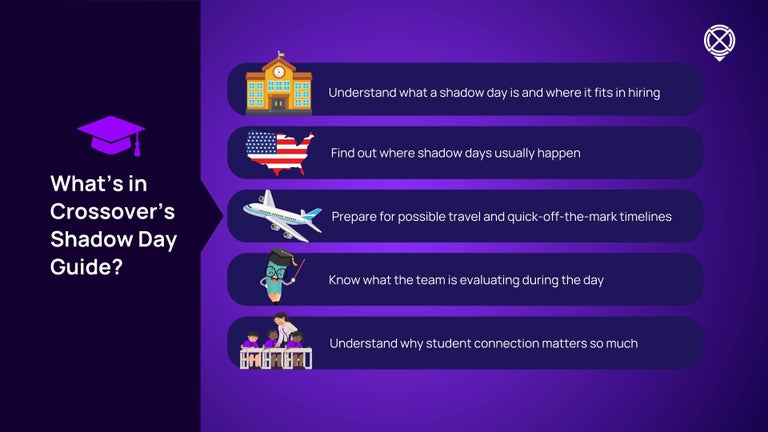
- Understand what a shadow day is and where it fits in the hiring process
- Find out where shadow days usually happen
- Prepare for possible travel and quick-off-the-mark timelines
- Know what the team is evaluating during the day
- Understand why student connection matters so much
You’ve earned the invitation, the door is open.
Let’s get you inside.
1. What is a Shadow Day?
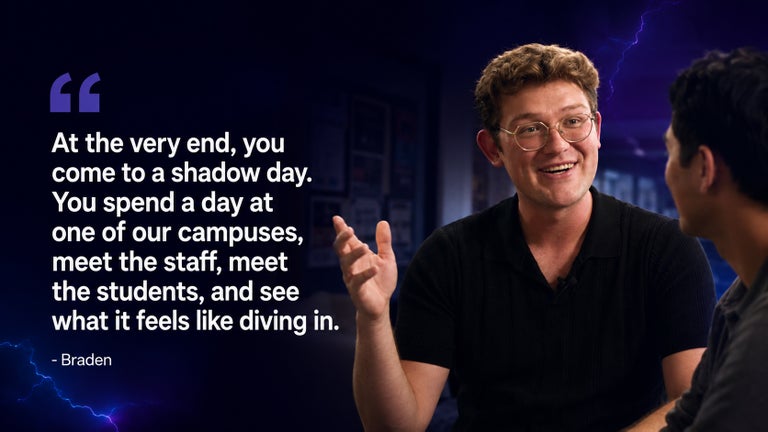
A shadow day is the final in-person assessment stage for many of our EdTech client candidates.
After you’ve passed the earlier remote hiring steps, you’ll visit one of our client campuses to see the school environment in real life and get a clearer sense of what the role will look like in practice.
Not everyone gets invited to a shadow day. But if you do, it means the hiring process has reached the point where both sides need to move from theory to reality.
You’ll get a chance to see how the 2 Hour Learning model works in real life. Depending on your role and campus, you’ll meet students, Guides, school leaders, and other members of the campus team.
You may also observe parts of the school day, join conversations, participate in activities, and complete a role-relevant assignment. Fun times!
You might:
- Experience different parts of the school day
- Spend time in classrooms or student learning spaces
- Chat to students and see how they learn
- Speak with school leaders and team members
- See the connections between students and staff
- Feel the pace, structure, and expectations of the school
2. Who is a Shadow Day For?
A shadow day is for our client school's EdTech candidates applying to roles where campus fit matters.
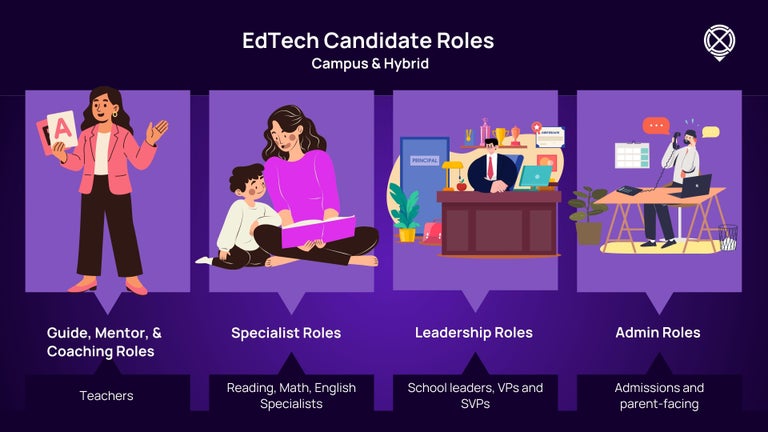
That includes:
- Campus-based roles
- Hybrid roles
- Guide, Lead Guide, mentor, and coaching roles
- Reading Specialist roles
- School leadership roles
- Admissions and parent-facing roles
- Roles where student, family, or campus interaction is part of the day-to-day work
Not every candidate needs a shadow day! Some remote roles or non-student-facing roles will follow a different process. But if your job involves spending time with real students, the shadow day is one of the most important parts of the hiring journey.
It helps the school team understand how you show up in a real environment. It also helps you understand whether the school environment is the kind of place where you want to work.
3. What is The Crossover Offline Assessment?
In many EdTech hiring processes, the ‘offline assessment’ is the stage where the process moves off Crossover’s remote hiring platform and into an authentic school environment at a client campus.
For many campus-based, student-facing, leadership, and parent-facing roles, that means attending a shadow day.
So, if you reach the offline assessment stage, you’re likely entering the final in-person step before an offer decision, unless your recruiter tells you otherwise.
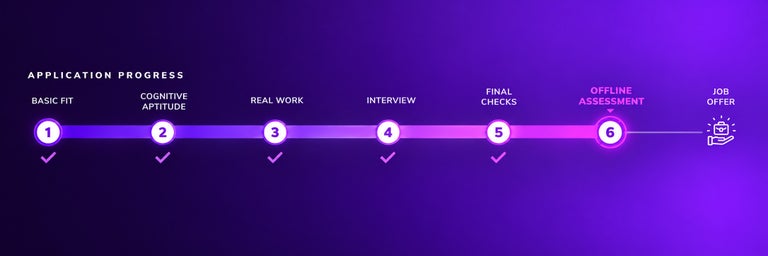
The offline assessment comes after:
- Passing the Criteria Cognitive Aptitude Test (CCAT)
- Passing any skill tests or real work assignments
- Making it through one or more remote interviews
- Completing final checks - including FBI clearance, any role-specific background or licensing checks, and passing the PCCAT.
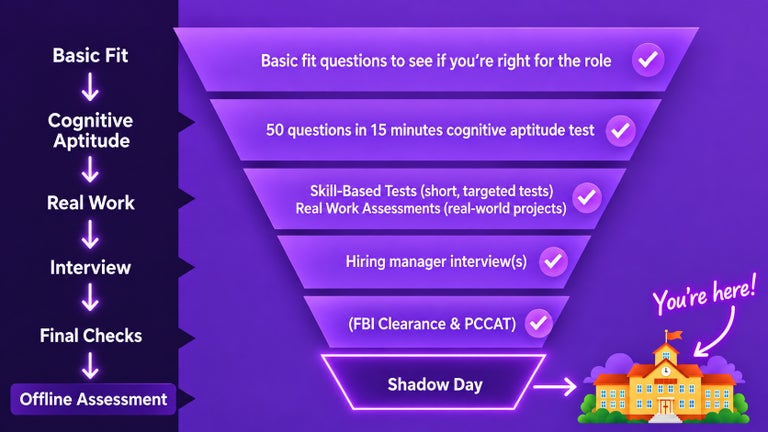
It’s true that the offline assessment process never follows the exact same path. By the time you reach it, the hiring process has usually moved beyond online tests and interviews.
Now the focus is on how you show up in the real environment where the role lives.
4. What is The Final Check Stage (Pre-Shadow Day)?
Before you can visit a campus for shadow day, you’ll need to complete the final check stage.
This includes two important steps:
The FBI clearance is a background check completed through fingerprinting. This is mandatory because shadow day happens in a real school environment, around students and staff. It’s one of the steps that helps keep the school community protected.
The PCCAT is a short, proctored verification version of the CCAT. It confirms that your earlier cognitive aptitude test result was completed by you, under verified conditions.
Together, these final checks make sure every candidate reaches campus with the right verification steps complete.
What Do You Have to Do for FBI Clearance?
For most US-based candidates, the process involves booking an in-person fingerprinting appointment, having your fingerprints taken, and submitting your FBI report through Crossover.
The key thing is to book your appointment. You can keep moving through the hiring process while the check is in progress, but your FBI clearance and PCCAT both need to be complete before you can attend Shadow Day.
You’ll usually pay for the appointment upfront, but the cost is fully reimbursable.
When your FBI report arrives, download it straight away. The result link expires after 24 hours.
For the full process, including US and international instructions, reimbursement, timing, and what happens when your results are ready, read the Official FBI Clearance Guide.
Safety first, as they say.
5. Where Does the Shadow Day Happen?
Shadow days happen at one of our school campuses.
In the past, many candidates visited the Alpha flagship campus in Austin. Today, shadow days happen across several campuses, depending on the role, location, availability, and scheduling options.
That means your shadow day may not happen at the exact campus or city connected to the role you applied for. When you reach this stage, you’ll be able to choose your preferred campus and date from the available options.
Then, your recruiting team will confirm the exact location, schedule, and next steps before you travel.
You might end up doing a shadow day at Alpha in Austin or at one of 2 Hour Learning’s other schools - Texas Sports Academy, gt.school, Unbound Academy and Next Gen Academy for example.
6. When Does the Shadow Day Happen?
After you complete the PCCAT and FBI clearance, you’ll be able to select your preferred campus and shadow day date within about 7 days. From there, you should plan to visit campus within the next 2–3 weeks. That means this stage can move quickly once you’re eligible to schedule.
The best thing you can do is keep the process moving on your side: complete the FBI clearance promptly, stay responsive, and watch your email for scheduling options. This isn’t the part of the process to disappear into the inbox swamp.
Watch out for those emails!
7. How Does Travel and Reimbursement Work?
If your shadow day requires travel, you’ll book your own travel and lodging.
That means you’ll choose and pay upfront for your own:
- Flights or other transportation
- Lodging
- Local transportation, if needed
- Other approved travel-related expenses
Then, you’ll submit your receipts for reimbursement of approved expenses.
The biggest rule here is to keep every receipt. Not some receipts. Not the receipts that survive in the mysterious lint realm of your backpack - all of them.
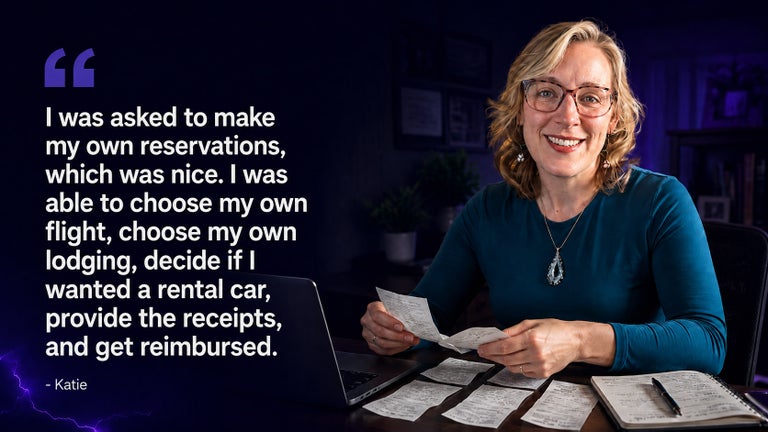
Find out more about Katie here.
Your recruiting team will share the reimbursement process and any relevant guidelines before you travel, so you know what to submit and where to send it. Follow those instructions carefully, because reimbursement relies on having the right documents in place.
In most cases, you’ll be asked to submit each expense with a receipt and a short memo explaining what the expense was for. It’s easy! For example: flight, hotel, meal, parking, local transportation, or FBI clearance.
Once you submit everything through the correct process, the reimbursement process can begin.
A few smart moves before you book:
- Check the campus location and arrival time before choosing flights or lodging.
- Leave enough buffer for travel delays, traffic, parking, and getting settled.
- Keep digital copies of receipts as you go!
- Ask your recruiter before booking anything unusual or expensive.
This approach gives you more control over your own travel plans while still making sure approved expenses can be reimbursed. The goal isn’t to make travel another aptitude test.
It’s to get you to campus with the least amount of drama, the right paperwork, and enough mental space to focus on the day itself.
8. Will You Spend Time with Students?
For many student-facing roles, yes.
Students are literally why the school exists, so if your role involves working with kids, then expect student interaction to be part of the day in some form - unless it's summer holidays.
That means observing students during learning blocks, joining conversations, supporting an activity, or pitching in with student coaching depending on your role, schedule, and campus.
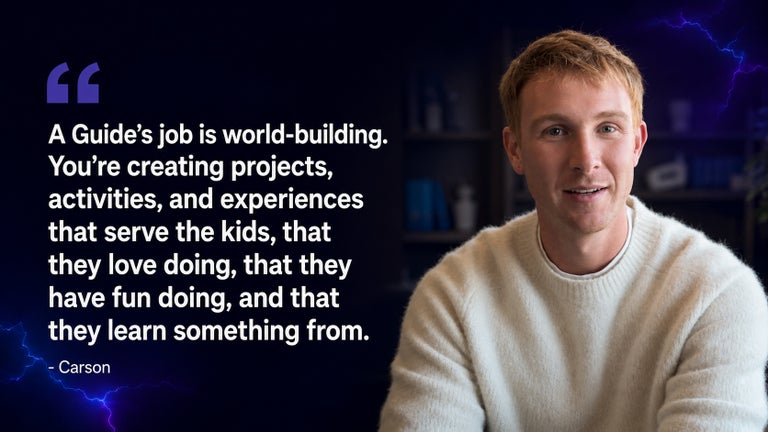
Your job isn’t to arrive with a faux superhero teacher persona and a pocket full of inspirational quotes. It’s to be present, attentive, warm, curious, and responsive.
The campus team will pay attention to how you engage in a real school environment. That includes how you speak with students, how you listen, how you adapt, how you respond when something unexpected happens, and how you balance confidence with humility.
If you’re asked to support students, think motivational coach, not 80’s answering machine. Don’t try to swoop in and solve everything. You could be helping students stay motivated, asking guiding questions, or supporting them when they seem stuck.
For non-student-facing or family-facing roles, the interaction will look different. Admissions and parent-facing candidates, for example, will spend less time in a full school day and more time understanding the model before completing a relevant simulation.
Either way, the principle is the same - shadow day is where the role becomes real.
9. Will You Meet School Leaders & Campus Team Members?
Absolutely!
You’re bound to chat up a storm with the key people closest to the role and leaders who make the model work at the school.
At this stage, both sides need to get a feel for each other. You need a clear view of the leadership, expectations, and culture. They need to see how you engage with the people around you.

This is one of the most important parts of the process because it moves everything out of theory and makes it concrete. A lot of applicants tell us it’s these conversations that really lock in the model for them.
You’re not evaluating an opportunity from a distance anymore - you’re seeing the great people behind it, asking questions in the moment, and gaining an authentic understanding of how the school operates on that day.
10. What Should You Expect on The Day?
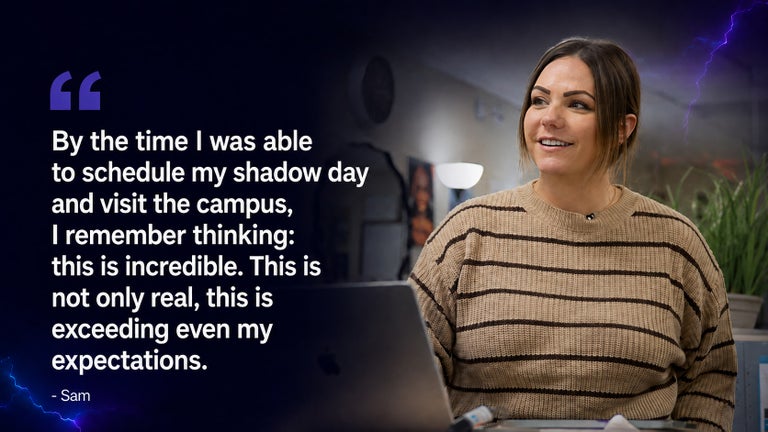
Most can expect a real school day, warts and all.
That means it may be impressive, busy, quiet, energetic, slightly chaotic, deeply focused, or all of those things before lunch.
You may see testing, tired students, schedule changes, or live problem-solving. It’s part of what makes the experience so valuable and such a crucial part of the hiring process. If you attend in the summer, there may not be any students because of holidays - so it really depends on timing and your role.
Depending on the day, you may:
- Observe students working through academic blocks
- Watch Guides or campus staff support students
- Join parts of the school day
- Participate in student-facing moments
- Complete a prepared assignment
- Speak with school leaders or campus team members
- Ask questions about the model and role
- See transitions, routines, and real-time problem-solving
- Take part in a role-specific simulation or activity
...or none of those things!
Every shadow day looks a little different depending on the school schedule, your role, and the needs of the campus that day.
The goal is to give you enough exposure to understand the rhythm of the school, the expectations of the role, and how adults support students at the school.
11. Will You Need to Prepare Anything?
Yes, expect to do more than observe.
Your shadow day is designed to give you a real feel for the work, and that means stepping into a role-relevant assignment at some point during the visit. Your recruiting team will confirm exactly what to prepare, so you won’t be guessing in the dark.
But in general, shadow day isn’t a passive campus tour! Definitely expect to participate and get in the trenches.
For Guide and Lead Guide candidates, this often means preparing and leading a morning opening session - and pitching in with student coaching or support in the afternoon.
For Reading Specialist candidates, the activity will connect to literacy, grade level, and the kind of student support the role requires.
For Associate Dean of Parents and Admissions Director candidates, the day is shorter, often around 1–3 hours. You’ll get time to absorb the model in person, then take part in a realistic parent-facing conversation with a skeptical parent.
Remember, you’re not there to act the part. You’re there to step into it.
12. What Are They Looking for During a Shadow Day?
We already know you can do the work – you aced the tests.
The shadow day is the school’s chance to evaluate you for team and culture fit. They’ll want to know if you can help students thrive. Really, help them make the most of the model.
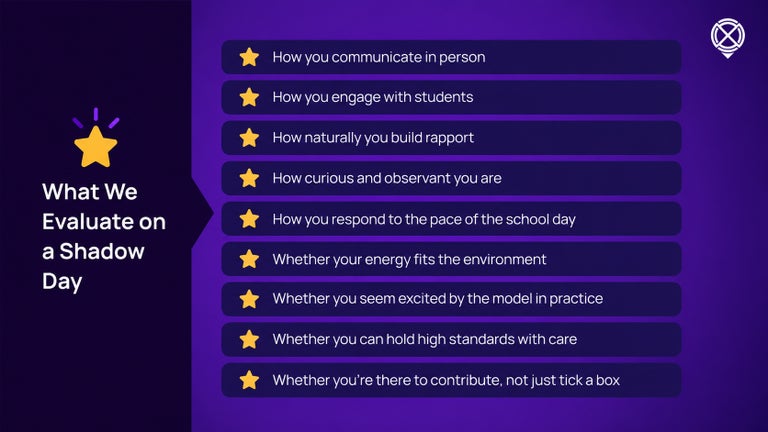
The team may look at:
- How you communicate in person
- How you engage with students
- How naturally you build rapport
- How curious and observant you are
- How you respond to the pace of the school day
- Whether your energy fits the environment
- Whether you seem excited by the model in practice
- Whether you can hold high standards with care
- Whether you’re there to contribute, not just tick a box
This is a ‘who are you?’ moment, and it’s different from traditional education in that we want the best of the best for everyone. If you find you fit here, we will too. The kids will love you.
That’s what makes your average school day exciting, every day.
13. How Should You Prepare?
Preparation is key, as they say – but it’s also built into our client's Edtech hiring process.
We’re confident that you’re going to knock this out of the park!
After all, it’s an epic moment you’ve worked hard to unlock. But we won’t pretend it’s not a little bit daunting. You probably have a million and one questions, like any person would who is dealing with a totally new school model.
So, think about those questions and come armed with them.
Think about:
- Why this role appeals to you
- What you believe great education should do for students
- What kind of environment brings out your best work
- What technical questions you still need answered
- What student stories from your past reveal who you really are
- How you build trust with young people

The strongest candidates talk about real students, real moments, and real relationships. They can describe what a student struggled with, how they helped, and what changed afterwards.
You don’t need to perform, but you do need to care. The 2 Hour Learning model doesn’t work without authentic empathy, and strong student-staff bonds.
14. What Happens After the Shadow Day?
After your shadow day, the campus team shares feedback and the hiring team reviews the next steps.
Because the legal and verification steps happen before the campus visit, shadow day is usually one of the final steps before a potential offer and a decision.
If there’s a strong fit, the process will move toward an offer and onboarding. If not, your recruiter will let you know what happens next. There are no guarantees for hire - only the best make it in.
Either way, this is the moment when the role stops being abstract.
You’ve seen the school environment and you’ve met the people. You’ve had a chance to understand how the model works in real life, and whether you can see yourself helping build it.
Most interviews ask you to imagine what the job could be like. A shadow day lets you step into the real thing and ask the bigger question - Is this where I can do the most meaningful work of my career?
The Final Stage Before You’re Hired
Most in-person interviews ask you to imagine what the job could be like.
The final stage of this application process for in-person education roles lets you step into a model built to change what school can be.

You’re not just coming in to answer some starched questions or make a lasting impression on the team.
You’re getting a rare chance to see the 2 Hour Learning model in action, to feel the electric energy of a 2 Hour Learning school built around mastery, momentum, and unlimited possibility - and to decide whether you can see yourself there, shaping what comes next.
For many candidates, this is the moment when everything clicks.
Ideas stop living on a page. The model stops sounding like pure theory. The mission becomes more than a brand slogan or smiling YouTube video.
You get to see what it means to work in a place that is trying to do something genuinely different for students, and for the people bold enough to lead them.
That’s why this is the most important stage of all. This is an AI-powered school sure, but without exceptional people running it, that means nothing.
The future of education won’t be built by people who are comfortable patching and repatching broken systems.
It’ll be built by people willing to step into new models, raise the standard, and help prove that school can be more ambitious, more human, and more effective than it’s ever been before in human history.
So - as you walk into this experience, don’t just think about whether you’ll get the job.
Ask yourself something bigger.
Is this the moment your career in education matters for generations to come?
Similar post

Want to read more?
We have a lot more where that came from


 AI-first education leaders.