How Did You Get into Education?
I never meant to become a teacher – I accidentally fell in love with it.
I studied linguistics and literature in my undergrad. After I graduated, I earned a Fulbright scholarship, which took me to Mexico City, where I did a little bit of research and a whole lot of teaching at a university.
When I got back to the United States, I decided to do Teach for America, where I was placed in a Title I high school.
The largest class I ever taught had 47 kids in it. These were high schoolers I was attempting to teach Algebra II to, and some of them were dealing with much bigger issues than high school mathematics. Things like teen pregnancy and hunger.
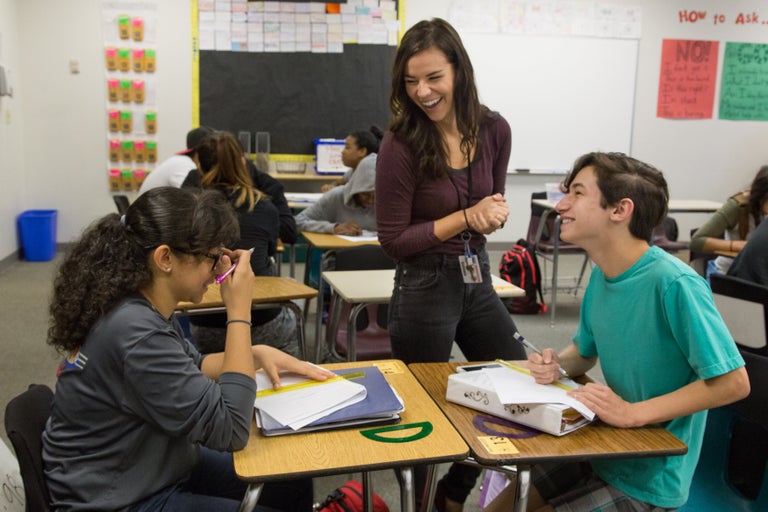
There was also no funding. I had to give up my own desk and let students sit there because there weren’t enough desks. The ceiling leaked, so whenever it rained, it would create puddles in the room. I was worried about mold.
But we sallied forth, and I taught those kids as best as I could.
For a lot of teachers in their first years, there are mixed feelings. You want to do so much. You want to make such a great impact, but it’s so difficult - often heartbreaking.
And there’s so much to do that sometimes, just by virtue of being a human being, you can’t do it all.
My name is Sam DePalo, and I'm a Lead Guide at Alpha Fort Worth.
See all open roles in EdTech here.
What Made You Realize Traditional School Was Broken?
When you’re sitting in front of 47 people and trying to teach them the same concept, and then grade all their papers, enter them into the gradebook, respond to emails, fill out paperwork, and do everything else, the impact starts to feel like it’s being dragged down by the day-to-day.
The bureaucracy.
The things that just feel so broken about education.
Over the few years I was in the Title I school, I was trying my best to make an impact and working more hours than were probably reasonable for someone in their early twenties.
I did a good job. I ended up getting Teacher of the Year and I started a district-wide STEM initiative, so I did things that had an impact.
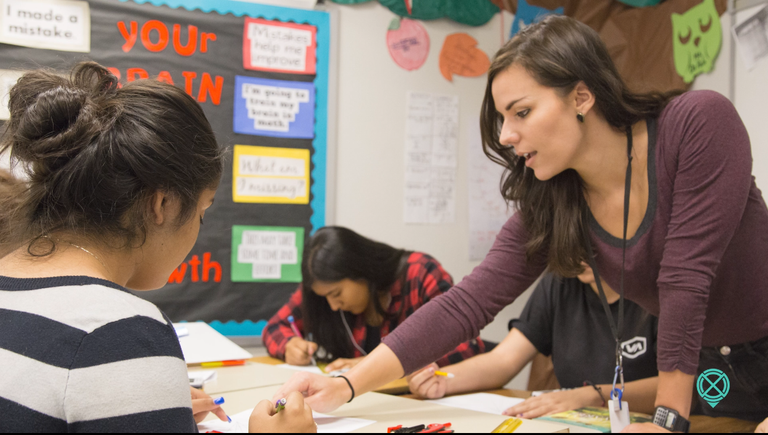
But I couldn’t help feeling like I had so much more to give.
It wasn’t just about making an impact or solving the problems directly in front of me. It was about looking at the system and thinking, there has to be a better way.
The educational system as it is today - was designed during the Industrial Revolution to create compliant workers, structure, and efficiency.
Educational research has been clear for decades - the single teacher in front of a huge room full of kids just doesn’t work.
So, what are we even trying to accomplish anymore?
Why Did You Try to Build Your Own School?
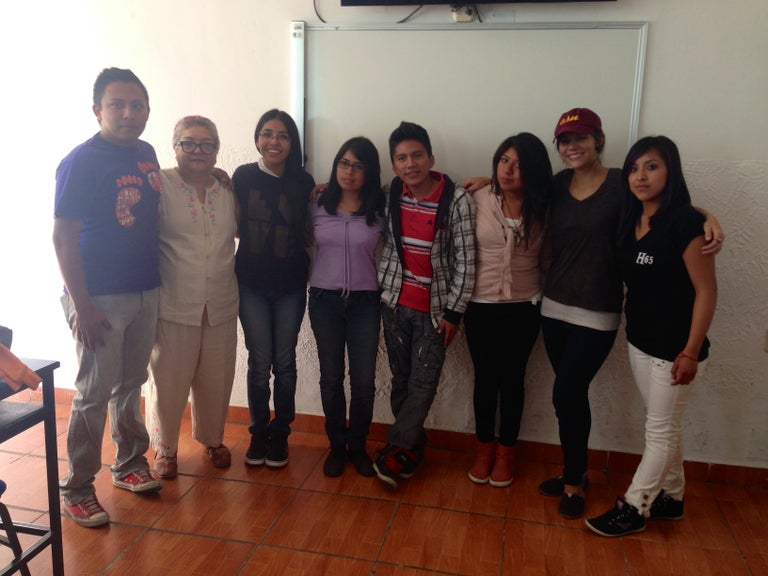
After that, I decided to make my own school.
I ended up helping found a private school that was intended to completely break the mold. It was an alternative school with one-on-one tutoring built into the school day. It was every strategy I could think of to fix the problems I was seeing in education.
I made an assumption that money and resources were the problem.
That’s what I saw during my time in Mexico, and what I saw during my time in a Title I school. But once I had the money, the resources, the capacity, the autonomy, and the authority to solve the problem - I realized pretty quickly that it wasn’t a panacea.
It wasn’t going to solve the problem.
The problem was more systemic, more structural. It goes back to the research that has been around forever - one teacher to dozens of kids doesn’t work. You can’t teach 20 kids, or even 15 kids, the same thing all at once and have any hope of them totally mastering it.
There were so many moments where it felt like whack-a-mole. You solve one problem, then another pops up. Then another. Then another.
And it all trailed back to the same basic issue. The school system is irrevocably broken.
Why Did You Leave Education Behind?
There was a certain point when I realized the system was just so broken, and there was nothing any one person could do with all the time, energy, passion, or even money in the world.
It felt futile.
So, I knew I had to leave education altogether.
I was coming home late every single day, after dark, after dinner. Then I was on the phone for the rest of the night, or on my computer until I literally fell asleep on the couch with it in my hands.
The work never stopped. It was never done. And it was certainly never enough. I absolutely quit teaching. I quit the education profession altogether. I couldn’t do it anymore, I was done.
A lot of my friends and my husband are in the corporate world, and I couldn’t help noticing that they were working from home, working normal hours, creating their own schedules, taking time off, and making twice as much, in some cases three times as much, as I was making while putting in these crazy hours.
So, I started looking for jobs in corporate America.
Educational consulting. Learning and development. Corporate training. Anything that could use my experience without keeping me trapped inside a system I no longer believed could be fixed.
How Did You Find Alpha?
I was looking for a new job in more of the corporate America realm, something in learning and development maybe.
I was talking to my godfather, who’s in tech, and he said, “Why don’t you look at some jobs on Crossover? Check this website out.”
So I did.

And I found a wealth of jobs that looked perfect for me. The one I really gravitated to was Educational Consultant. The more I read the job description, the more I realized - this is exactly aligned with everything I know how to do.
It was all about being an expert in education.
Then, as I explored more and more, I realized what it was - a Guide position at Alpha.
I can definitely see why they marketed that job as Educational Consultant, because nobody knows what a Guide is. And I was looking for a job in corporate America. I wasn’t necessarily going to gravitate toward something called Guide.
But it’s a really, really cool job.
It’s being the teacher, so to speak, in the future of education, but with the broken ‘teacher’ part taken away.
It’s not standing in front of a room delivering a lesson that may not seem relevant to anything going on in students’ lives. It’s not trying to get 30, 40, or more kids to master the same thing, at the same level, through the same delivery.
It’s doing the human part of the teaching role, which is what everybody gets into education for in the first place. It’s being a mentor, a coach. Being a guide to kids.
Helping them find their way.
What Changed Your Mind About Alpha?
I have to be honest… I was really skeptical.
The job post talked about no more lesson planning, no more dealing with parents, and all the parts of teaching that are less desirable, shall we say. It seemed a little too good to be true.
The more I went down the rabbit hole and researched Alpha, the future of education, and all the various elements of the role, the more skeptical I became.
There was no way this was real.
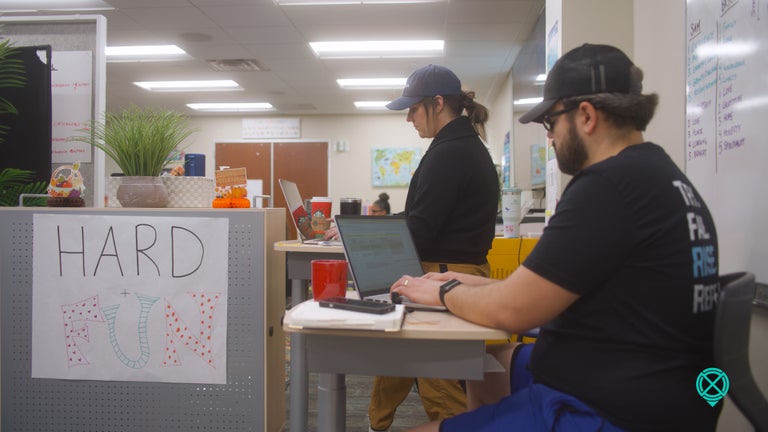
Part of the application was chatting with an AI bot and mentoring and coaching it. The entire time I was thinking, what data are they collecting? Are they training the AI through this fake application?
Then there was the video part, where they asked me to film myself teaching. I thought, they’re making an AI teacher, and they’re going to use my likeness and my voice. I was really skeptical.
But I remember watching the videos that were part of the job application process and seeing the potential. What if this is true? Most of the day is spent on life skills. That’s brilliant. That’s exactly how schooling should be.
I couldn’t give up on the process just by assuming it was fake.
What if it was real? It was absolutely groundbreaking, and it was too enticing not to take the risk and keep going down the rabbit hole.
One of the first things you have to do as part of the application is take the CCAT, the Cognitive Aptitude Test. I thought that was brilliant. I loved taking it and seeing my score. But it also pointed to the fact that this is an organization only looking for top talent.
And if it was real, and I did get a job there, my colleagues were going to be brilliant. After the CCAT, there was the mentorship test, the storytelling test, and then the interview.
Up until midway through that first interview, I was still kind of looking like, are you AI? Is this a real person I’m talking to? But I stuck with it.
Then I went to the second interview, where I met my now-boss.
I was able to chat through things, see her passion, and see more behind the curtain. I could see that there really were kids there. The things she was saying rang true. They resonated.
I scheduled my shadow day and went to Austin to be on-site and visit the campus. I remember going into the restroom at one point during the day and almost crying because I thought, oh my God, this is incredible.
This is not only real it’s exceeding even my expectations.
I HAVE to work here.
Find out more about our selection process here.
When Did You Know Alpha Actually Worked?
Seeing things in real life day to day, from the start of school in August until now, the rapid change in the children is miraculous.
They become so confident so quickly. They learn life lessons that, frankly, I didn’t learn until my late twenties or early thirties. But what finally sealed the deal for me and washed away that last little speck of skepticism was when our MAP scores came out.
I’m a very data-driven person, I’ve had to be in my career. That has been ingrained in me for over a decade. So I was waiting for those MAP scores.
I thought, we’ll see. It’s a newer school. These are kids new to the model. Maybe all those data points they market are for kids who have been there for a while, or it’s a smaller subset.
But all of my students came back in the top 1% for growth and achievement on the MAP scores. Coming from NWEA.
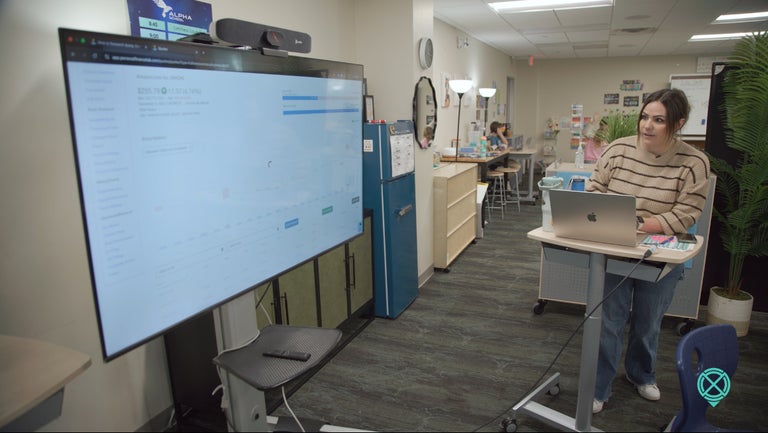
Not from our school, not our data…nationally sourced data.
I was blown away. The Alpha model isn’t only based on the research showing that one teacher in front of the classroom is outdated. It’s also based on mastery learning.
At Alpha, students have to master 90% of a grade-level curriculum before moving on. In most public schools, the bar for mastery is 75%.
That means if a student comes in at fourth grade but is at a first grade reading level, they can accelerate rapidly while still filling every hole in their learning. They master first grade, move to second, master second, move to third, and keep going until they reach their grade level and can move beyond it.
It’s a truly individualized, mastery-based learning model.
And it works.
What Makes the Guide Role Different from Teaching?
It took a pretty major cognitive reframe for me going from Teacher to Guide.
So much of what I had done my whole career was teaching kids, giving them information, delivering content to them.
That’s not what this role is.
When you’re a teacher, the human element is often pushed to the side. It becomes the last priority because you have to get the data, get the test scores, take attendance, grade papers, respond to emails, and do all the things.
You often don’t have time to sit with kids one-on-one. To learn what makes them tick and what motivates them. To find out what they’re passionate about.
As a Guide, that’s the job.
If the most important thing to you in your teaching career is developing relationships with students, making connections with them, leading them down the right path, and being that person for them, then being a Guide is a natural fit.
If your favorite part of teaching is delivering content, this won’t be the best fit for you. I enjoyed doing math all day, don’t get me wrong. But that wasn’t my favorite part of the job. The human part was.
Explore high paying EdTech jobs here.
What Would You Say to People Who Think Alpha Replaces Teachers With AI?
The biggest thing people don’t understand is that Alpha is not AI replacing teachers.
There’s so much fear around AI. There’s so much fear in general.
But what I’ve found working here is that this is empowering, it’s future-leaning. If you like research and data and doing things the way they should be done, then leveraging technology to do so is a natural thing to do.
And it works.
Why wouldn’t we do this? It’s for the kids. It’s all about the kids, about benefiting children.
I was worried I’d get here and it would just be a grift. A really great marketing plan, but the kids would be unhappy, or they’d be in front of a screen all day, or the life skills workshops would just be repackaged project-based learning.
None of those things were true.
The kids prefer to be at school over going on vacation. That’s actual data we’ve collected. They’re learning so much, so quickly, in two hours a day.
That’s the only amount of time they’re spending on screens. I would challenge anyone to find a traditional school that only spends two hours a day on screens. In most scenarios, it’s much more than that.
And the life skills piece is brilliant.
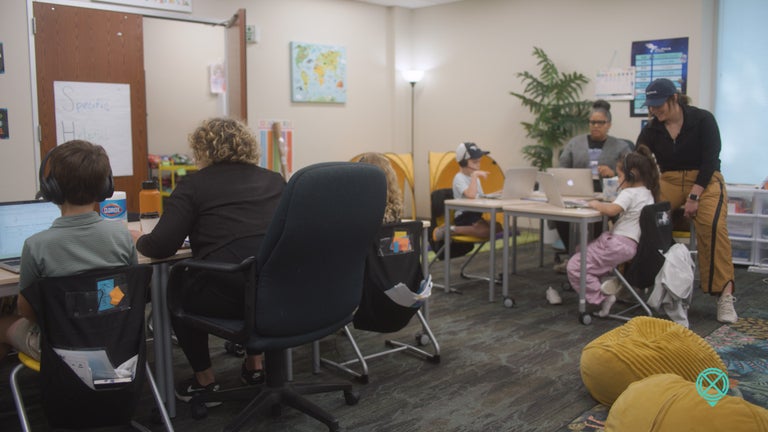
Students are learning independence, giving and receiving feedback, leadership, public speaking, financial literacy. Things we all wish we had learned in school but never had the time or opportunity to because we were so busy dividing polynomials.
The model isn’t just the technology. It’s not getting academics done early, or life skills, or just having elite adults in the room to mentor and guide kids. It’s all of those things together.
Alpha has cracked the code.
How Has Alpha Changed Your Life?
So much has changed since I joined Alpha.
I moved halfway across the country, and I live in Texas now. My work-life balance is a lot better. I’m able to leave the house at a reasonable time and get home at a reasonable time.
The amount of work I have to do outside of school is less, but it’s also a lot more creative, more meaningful, and more relevant to the real world.
I’m not grading papers late into the night.
I’m dreaming up workshops for my kids, who I know so well and who I know will love them. It’s been so rewarding in so many ways.
I never have that Sunday night feeling of dreading going to work the next day. I might be tired, but I don’t wake up thinking, I don’t want to go to work today.
I’m genuinely excited to see the kids and to see my colleagues.
The work I get to do is much more creative. It’s based on my own passions, talents, and interests. There’s nobody standing above me saying, ‘you have to do this.’ There’s no system saying, ‘it has to look this way.’
This is brand new.
And it’s so exciting to be on the forefront of it, designing a completely new, authentic experience for kids to learn. I really didn’t think I would ever go back to a school. Ever.
But Alpha School is not trying to fix the problems in education, which is what I was certain, and still am certain, can’t be done. It’s dismantling the system altogether and building something completely brand new.
That’s what drew me in – all thanks to a job I applied for on Crossover.
Want to keep reading? Meet Tyisha Brooks, an L2 Guide at Alpha.
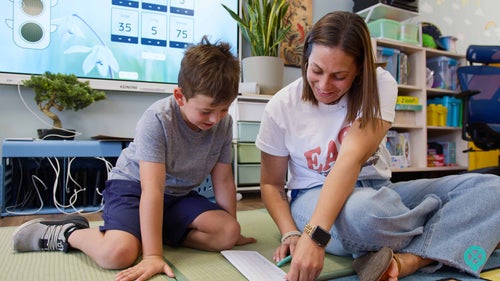



 AI-first education leaders.