Why Did You Want to Work in Education But Not Be a Teacher?
For a long time, I didn’t think education was where I’d end up.
I spent my childhood and time in college thinking I was going to go to law school. I had a big background in speech and debate, and I did mock trial for four years at Northwestern.
I loved competing. I loved public speaking and getting to learn the law. But by the end, I realized that my favorite part of it was being a captain.
I really just loved coaching others.
After I graduated, it was during the pandemic, and I had this reflection time to think, what do I really want to do? I knew I loved coaching, so I started thinking maybe there was something in education there.
At first, I thought, great, I’ll be a professor. That’s the answer.
So, I went to grad school in a PhD program in political communication, thinking I was going to be a professor. And I very quickly realized I didn’t love academic research. But I did love working with students.
That was confirmed right off the bat.
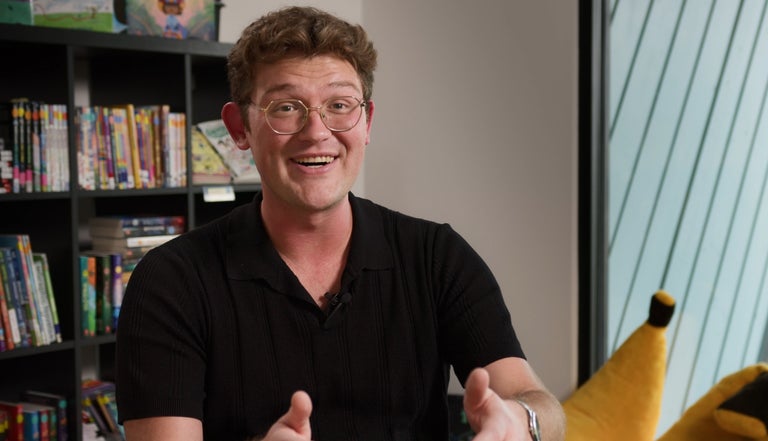
I loved all of those opportunities as a TA - office hours, lectures, all of it. Just working with students. So, I decided I didn’t want to be a professor either. I was able to master out of my program and then was trying to figure out what I wanted to do next.
I knew I wanted to work in education, but I would always tell people, “I want to work in education, but I don’t want to be a teacher.” People would say, “What does that mean?” And I would say, “I have no idea, but I think it exists.”
Reading the description, my first instinct was to think back on my experience in mock trial and coaching at Northwestern and UCLA. I realized I could talk about the things I think I’m best at, even if it wasn’t my traditional job experience.
And I thought that would apply so well to this role.
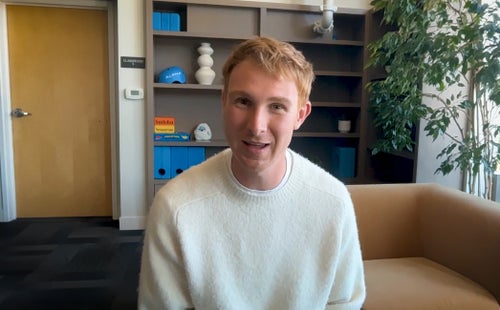
My name is Braden Pomerantz, I’m the Head Guide at Alpha, Austin.
How Did You Grow from Guide to Head Guide?
My first year at Alpha, I started as a Guide at Alpha Brownsville.
I worked with our fifth and sixth graders, and I did that for a year. I fell in love with the model and working with the kids.
It was the second year of that campus, and I also loved getting to help establish a campus and build what Alpha Brownsville looked like in a way that was different from another Alpha campus.
My second year, I was promoted to Lead Guide and ran our GT school here in Austin. That meant opening my own campus that I ran. It’s our Alpha model for gifted and talented students. I still got to work with my own group of kids, fifth through seventh graders, but I also got to oversee the campus.
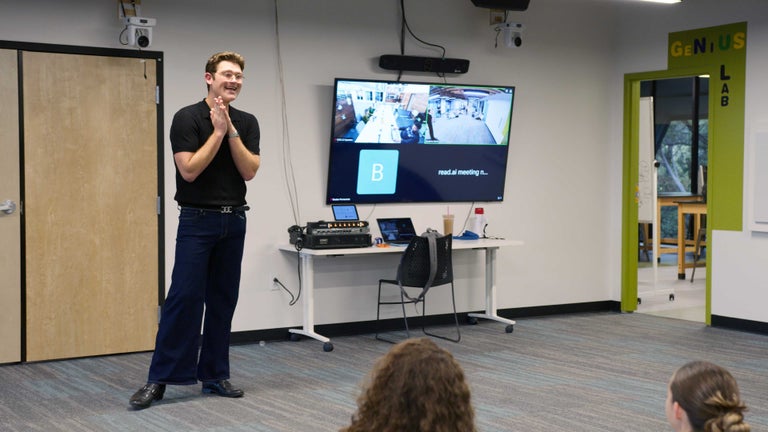
I coached another Guide who was working with our younger students. I did admissions. I got to do a lot of that parent-facing work, which I also really loved.
Now, in my third year at Alpha, I’m in this Head Guide role at our biggest campus, doing it even more at scale. My first few years were at smaller campuses, helping get them started and seeing that my systems worked really well there. Now it’s taking those systems to our biggest campus and seeing the results in a much larger capacity.
One of my favorite things about Alpha is that we are such a “prove it” company.
There’s an opportunity for any Guide to come in and crush the core of their role. If you do really well at your role and show excitement about doing things beyond your role, we will let you.
And if you crush that, then great. We’ll promote you and give you more opportunities to grow.
What Does a Guide Do?
A Guide is our teacher role at Alpha, but it’s very different from being a traditional teacher.
Our Guides don’t really teach in the traditional sense. The only way they might teach is through life skills workshops in the afternoon. The rest of the day is about setting a high standard and getting kids to buy into that standard.
It’s about asking - how do you get the kid motivated and excited to do these things?
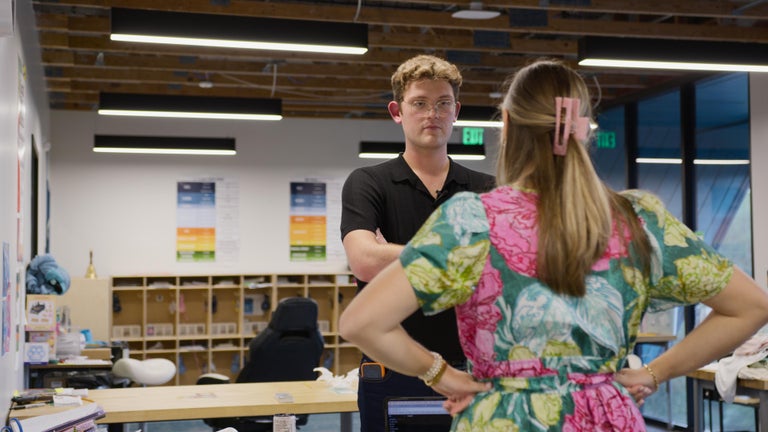
You’re not going to tell them how to do it. You’re going to equip them to take ownership of it. You’re going to ask lots of guiding questions when they try to get out of it or lower the standard.
It’s a lot of one-on-one coaching conversations throughout the day. That feels very different than being a teacher. When you’re a teacher, you’re in front of a large classroom, and it’s one to 30 all the time.
As a Guide, most of the time it’s one to one, one to five, or one to 10.
That much smaller scale allows for the more nuanced coaching you see from Guides. And a typical day at Alpha means you are spending almost all of your day with your kids.
Students show up around 8:45, and you’re greeting them. Then you lead a morning launch, which is a growth mindset activity - things like the power of yet, embracing challenges, and ideas that stick with them throughout the day.
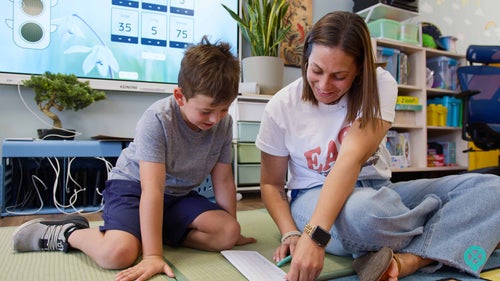
After that, students move into two-hour learning, which is our academic period. During that time, you’re not teaching the content. You’re doing one-on-one coaching, emotional and motivational support, tracking the data to see if students are on track for their goals, and course-correcting when they’re not.
Then you spend lunch with the kids, which is another opportunity to deepen those relationships and continue that coaching.
In the afternoon, you’re leading life skills sessions, including workshops and check chart activities. At the end of the day, you facilitate shout-outs where students recognize each other for the life skills they demonstrated that day.
So yes, the day is academic. But it is also deeply relational.
What Makes Someone a Great Guide?
What makes a good Guide is someone who is an expert kid motivator.
That can look 10 different ways.
Maybe you came from speech and debate coaching. Maybe you were a traditional public-school teacher. Maybe you were a soccer coach. But you have some experience with kids where you’re able to motivate them in the way Guides do.
That doesn’t mean you’re great at lecturing or teaching content. It means you can really connect with kids. You can learn what makes them tick. You can help them find their why and the things they’re excited about.
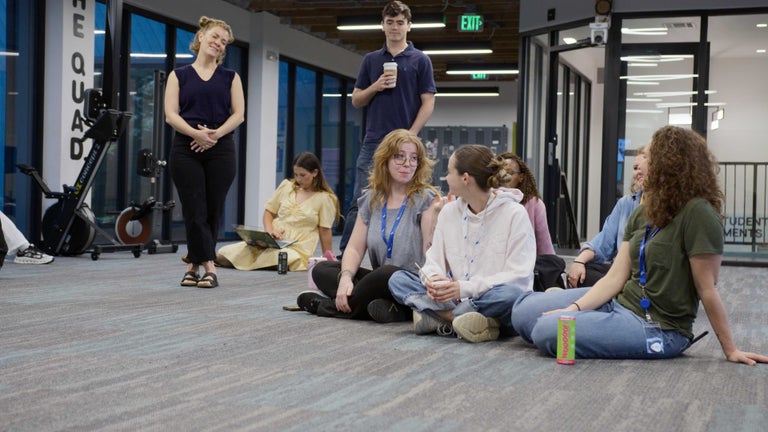
When we’re interviewing someone, we want to be able to say, yes, I could see a kid after two weeks saying, “I just love this person. I feel like I can bring everything to them and give them all of my trust.”
One of my favorite things about the Guide role is that there’s no single way to do it. There are a million different ways to be a good Guide, and there is so much opportunity to bring yourself into it.
My guiding style is very goofy. I get to bring that goofiness into my interactions with kids. I get to high-five. I love getting down on their level and chatting with them.
Other Guides have different styles based on their own experience, and we allow them to lean into that. Part of being a Guide is figuring out what works.
It might not work right away. There might be a style kids don’t connect with. Then it’s about adapting and asking, what is going to help this kid really connect with me?
Often, it comes back to building the relationship.
Are you asking kids questions about themselves? Are you spending time with them? Are you going out to recess and shooting hoops if they like shooting hoops? If they really like Pokemon, are you getting them Pokemon stickers?
Those connection points might look different based on your personality or background, but the idea is the same. The Guide role is all about meeting the kid where they are.
We want our Guides to know the kids better than anyone else.
What Do You Look for When You Interview Guide Candidates?
In the past year, I’ve interviewed over 150 prospective candidates.
The first thing I’m looking for in a Guide candidate is - am I 100% confident that on day one, I can throw you in front of kids and say, they will love this person?
Are you engaging? Are you energetic? Do you smile in that way when you’re talking about your kid experiences, where I can tell you love doing this and you’ll be excited to do it every day at Alpha?
The second thing I’m looking for is whether candidates have high standards and can hold kids to those high standards. Everything we do at Alpha is high standards. We want kids to do really impressive things. So, I want to hear about a time you held a kid to a high standard and maintained it.
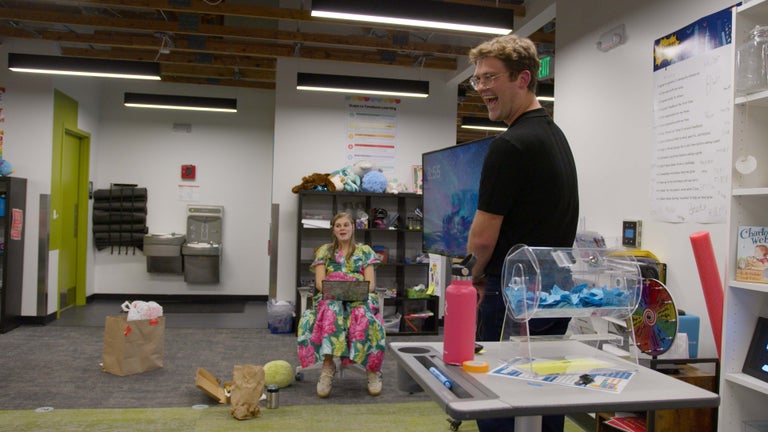
If they tried to lower the standard, or maybe didn’t know what they wanted to accomplish, could you help that kid in a way that resonated with them and got them bought in?
Could you get them to a place where they believe, “Actually, high standards are best for me because they help me grow, and I want you to hold me to those standards?”
The number one thing I tell candidates is - be specific.
When I ask for a specific example of high standards and high support, or a specific example of a kid who would 100% say they loved working with you, a lot of people start with, “Well, there are lots of examples.”
And I’m like, yes. Give me the one.
The people who really illuminate that example, who light up talking about it and remember it like it was yesterday, even if it was 10 years ago, those are the ones who stand out.
My favorite question to ask is - Tell me one kid you have worked with in your life who would say, “Braden, 100%. That kid would say they loved working with me, and maybe that I’m one of the two educators who changed their life.”
Then tell me how you built that relationship. What I’m really looking for is, do you light up? Do you smile because you have just the kid?
But at the same time, does your answer reveal that you’re able to build that relationship in a way I know you can apply to other kids too? Because once you have that relationship, and you can build it, then you can hold them to high standards and lean on that relationship.
What Does High Standards, High Support Mean at Alpha?
High standards, high support is the core of the Guide role.
Every student interaction should bring both. A simple example is our second commitment - every single kid is going to learn twice as fast.
If a kid is struggling, you might think, okay, maybe this kid can only get one and a half. But for us, the standard is that every kid can get to 2x.
That might just mean we need to raise the support. We’re not going to lower the standard to one and a half, or one, or even 1.99. Instead, if they’re struggling, we ask what’s happening.
Have we not connected with them yet? Is the content too hard? Do we need to reach out to academics? Are they just not motivated?
As their Guide, I need to figure out what they’re excited about. I need to come up with a motivational model. Maybe they earn certain stickers. Maybe they earn an off-campus experience. Maybe they get boba. Kids here love boba.
The support side is figuring out how to get them excited to do the work, while keeping the standard the same.
And that applies to employees too.
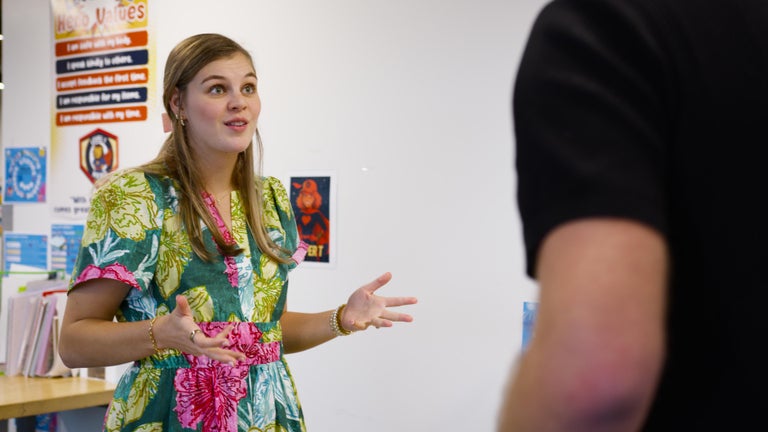
We’re going to expect and hold all of our Guides to the standard that they are delivering the three commitments to their kids - most of their kids love school, learn twice as fast, and learn real life skills.
At the same time, there’s a lot of support built in.
Guides go through a three-week training program where they learn all things Alpha. They get to do it firsthand. They get to meet our students and staff and be a Guide trainee for a couple of weeks, so they can see what it looks like and figure out their style.
Then once they start, every Guide has a Lead Guide.
That person’s whole role is coaching the Guides. They’re doing coaching conversations, observing, giving feedback, and leading collaboration and brainstorm meetings with the team. We really believe in a constant feedback loop.
And we want it to go both ways. It’s not just top-down feedback. You also have opportunities to give feedback to your manager, or to me as the Head Guide, about things you think we can do better as a campus.
That’s one of the things I think is really cool about the Guide role.
There’s so much opportunity to make an impact - not just for your group of kids, not just for your level, not even just for the campus, but maybe even the whole organization based on the things you’re doing.
Why Is the Shadow Day So Important?
To apply for Alpha, there are a few steps.
You’ll do a cognitive skills test first, which assesses the way you think about problems. Then you’ll submit a couple of different videos - one about the way you’ve coached kids, and one where you tell an engaging story designed for kids.
Find out more about our selection process here.
Once you get past those stages, you do an interview, often with me or one of my colleagues across the organization. After that, you do a second-round interview with our Director of K-8.
Then I think what’s really cool about our process is that at the very end, you come to a shadow day. You spend a day at one of our campuses and just be a Guide for the day.
You meet the staff. You meet the students. You see what it feels like to dive in. Alpha covers everything related to the shadow day. We pay for you to come to the campus, to stay and for your food.
We do that because we think the shadow day is one of the most important parts of the process. We can have a great interview. You can have great answers and stories. But I want to place you in front of five kids.
- Can you command a classroom?
- Can you form those one-on-one relationships?
- Can you dive in and be super proactive with the kids and the Guides throughout the day?
That’s my favorite thing to talk about with shadows when they get here. It’s real. And they’re like, “It is real.”
I’ll ask, “Did you doubt?” And they’ll say, “Yes, I wasn’t sure.”
That’s how I felt three years ago too. I saw the videos. I hadn’t heard of Alpha before. I thought, this sounds awesome. Has anyone heard of it? Is it real? I don’t really know.
Then I showed up on day one. I was like, yes, it’s real, it’s great. And it’s so fun to be a part of, all because I was hired on Crossover.
Want to keep reading? Meet Sam a Lead Guide at Alpha.


 AI-first education leaders.