Contents
- Insight #1: Motivation Is the Limiting Factor on Learning
- Insight #2: AI Is a Lever, Not a Solution
- Insight #3: Personalization Is a Need (Not a Nice-to-Have)
- The Future of AI Learning for Kids Is Human
AI learning for kids is stuck between two bad stories: the fear story where software replaces teachers, and the hype story where the right app fixes school. The classrooms getting results are proving something more useful. AI can carry more of the academic load, but expert humans still decide whether the learning sticks. From new bottlenecks to a rising mastery bar, we’re sharing 3 expert insights from people using AI every day to redefine K-12 education.
While the headlines argue, AI learning for kids has already arrived in the classroom.
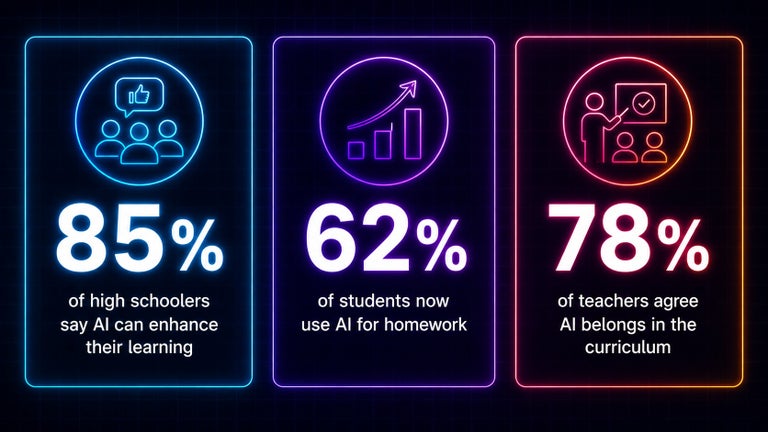
A 2025 College Board survey found that 85% of high schoolers believe AI can enhance their learning. RAND tracked AI homework use among students from middle school up, climbing from 48% to 62% across seven months of 2025. And an NPR/Ipsos poll found that 78% of K-12 teachers agree responsible AI use belongs in their curriculum, while only 33% say their school has a formal student AI policy.
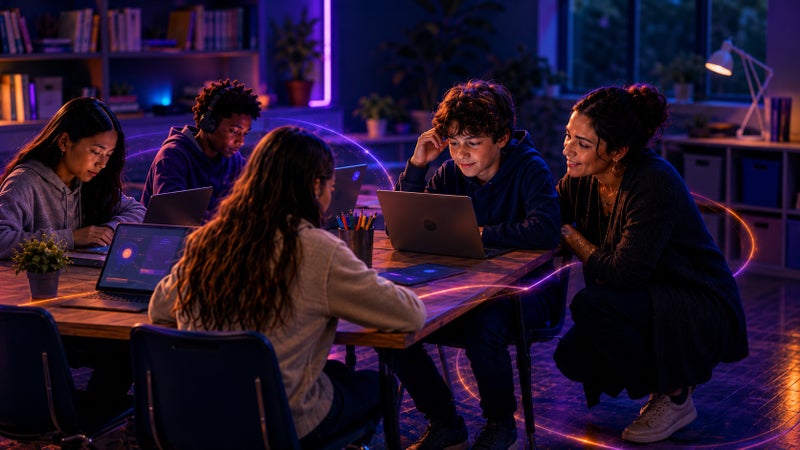
Kids are using artificial intelligence (AI). Teachers know it belongs in the conversation. Schools still don’t have a working model for what AI learning is supposed to look like.
So the vacuum gets filled by the loudest stories. Either AI is the threat that will hollow out childhood, or it’s the tool that will finally rescue education from itself.
Neither version survives first contact with the schools already using AI well.
Wondering what great AI learning for kids actually takes to get right? Here are 3 expert insights on AI learning from the people who see, use, and build with AI every day.
Insight #1: Motivation Is the Limiting Factor on Learning
TL;DR: AI can personalize the academic path. It can’t make a kid want to walk it.
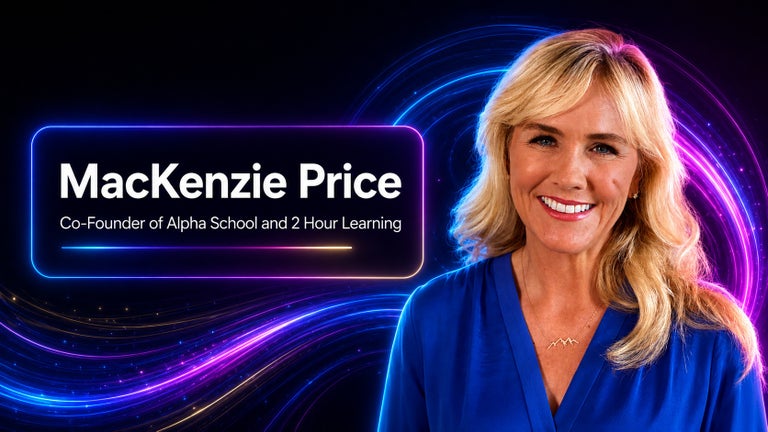
Here’s MacKenzie Price’s - Co-Founder of Alpha School and 2 Hour Learning - breakdown of the learning equation that runs the classroom:
“The perfect equation for an ‘ideal’ learner is 10% curriculum and 90% motivation. You could hand the smartest kid in the world the best software ever written, but if that kid isn’t motivated to learn, it’s game over. A motivated C student will almost always outperform an unmotivated A student.”
That can sound exaggerated until you picture the AI classroom everyone’s arguing about.
A student sits down. The software knows what they’ve mastered, where they’re stuck, and what lesson should come next. It adjusts the pace, personalizes the explanation, generates extra practice, and keeps the academic path moving without making the rest of the room speed up or slow down.
That solves a massive part of the old classroom problem. With AI, a teacher no longer has to aim a standard lesson at the mythical middle of thirty unique minds.
But it also exposes the part schools used to hide behind logistics.
If the curriculum is adaptive, the bottleneck moves from “Can we get through the content?” to “Will this student stick with the work when it gets uncomfortable?”
That’s a transition that has fundamentally changed where attention falls in the classroom.
A kid rushing through easy work doesn’t need more content. They need someone who raises the standard. A kid who sees difficulty as proof they’re bad at something doesn’t need another explanation. They need a person who can help them reinterpret their struggle.
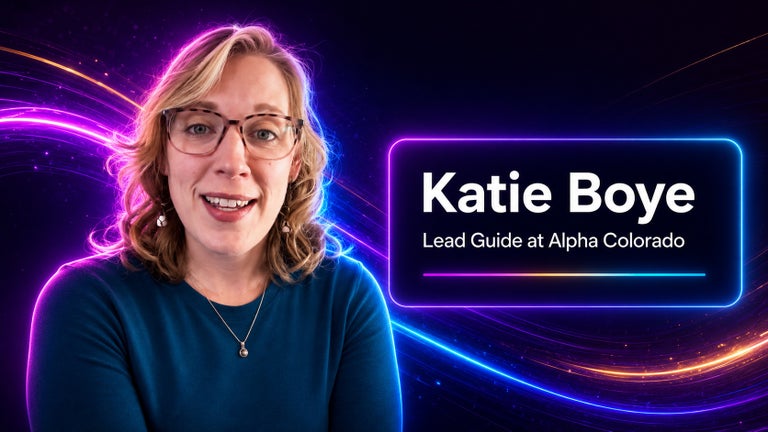
Katie Boye - Lead Guide at Alpha Colorado - describes the emerging human layer she sees on the front lines:
“Students could just be learning online at home if that was what they wanted to do. They need their constant cheerleader, the person that’s going to help them see their own potential when they’re having a really hard day, and they can’t see it themselves.”
AI is making the academic engine faster and more personal. Guides are responsible for the conditions that make a student want to use it - motivation, persistence, confidence, standards, and momentum.
That line matters because screens don’t create connection, and connection feeds motivation. The Center for Democracy & Technology found that half of students say using AI in class makes them feel less connected to their teacher.
That’s not an argument against AI learning for kids. It’s an argument against removing the human layer and calling the leftover software a school.
The best AI classrooms use tools to take pressure off academic delivery, then put expert humans on the work that makes kids want to keep going.
Insight #2: AI Is a Lever, Not a Solution
TL;DR: AI becomes dangerous when kids use it to skip their foundation. It becomes powerful when schools use it to build the foundation faster.
MacKenzie Price is blunt about the risk most AI-in-education debates underrate:
“The most dangerous thing in your kid’s life is the belief that they don’t need to learn facts because of technology. Kids can’t ‘collaborate’ or ‘think critically’ if they don’t have a fact base. They can’t ‘think outside the box’ if they don’t know what kind of box they’re in.”
That’s the failure mode teachers are worried about.
A student gets an assignment, uses AI like a search engine, generative AI spits out a draft, the student rewrites the output just enough to pass. The learner moves on without doing the mental work the task was supposed to exercise.
The problem isn’t that AI helped. It’s that AI replaced the part of the process where learning was meant to happen.
That’s why the fact base still matters in the AI age. You can’t think critically about a subject you don’t understand. Find creative connections between ideas you’ve never encountered. Challenge an answer without knowing enough to see what’s missing.
Used badly, AI lets kids perform understanding without building it. Used well, it does the opposite.
It can drill the fundamentals at the right level, catch gaps early, keep practice moving, and help students reach mastery without waiting for the whole class to arrive at the same point. That doesn’t make facts less important. It makes the path to them faster and more precise.
And speed matters because facts aren’t the finish line.
They’re the launchpad for the work schools say they want more of: projects, debates, experiments, writing, building, problem solving, and the messy application that turns knowledge into judgment and skill.
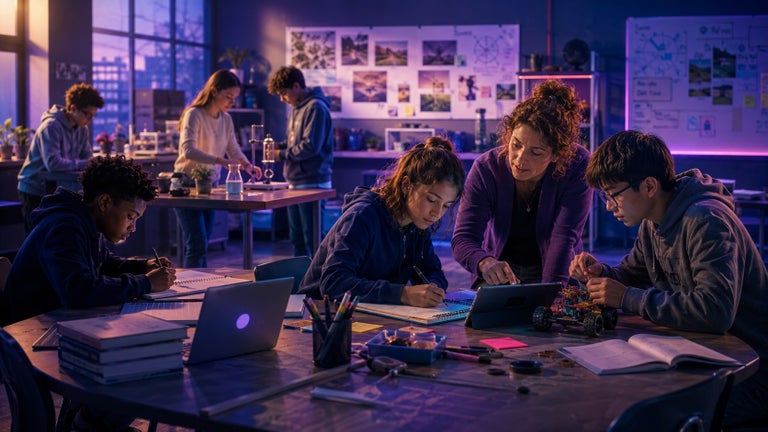
That’s the lever.
AI drives more of the academic load, but it doesn’t define what the load is for. Guides still have to decide whether the tool is helping a student build capacity or helping them avoid it.
The best AI learning for kids doesn’t ask students to choose between knowledge and creativity. It uses AI and machine learning to build knowledge faster, then gives expert humans more room to develop what that knowledge is for.
Insight #3: Personalization Is a Need (Not a Nice-to-Have)
TL;DR: One-size schooling was built for a standardized world. AI makes individual mastery practical enough to become the new baseline.
MacKenzie Price uses a simple metaphor for what traditional classrooms do to kids who don’t fit the average:
“Traditional classrooms are like forcing everyone to wear the same prescription glasses. If your kid’s vision happens to match, great. If not, they spend 10 years squinting at a blurry board, convinced they’re bad at seeing. When really, they just need a different lens.”
That’s the hidden damage of teaching to the middle.
One child needs more time. Another is ready to move faster. Another needs the idea explained visually, verbally, physically, or three different ways before it lands.
The traditional classroom can see those differences. It just can’t reliably act on them.
One teacher can’t run thirty different learning paths simultaneously. So the classroom standardizes to the same lesson, same pace, same deadline, same test. It’s efficient enough to keep chugging along, but it mistakes manageability for fit.
AI changes the arithmetic.
AI can adapt each student’s path, pace, sequence, and practice in real time without asking one teacher to manually hold every variable in their head. It makes scalable personalization operational instead of aspirational.
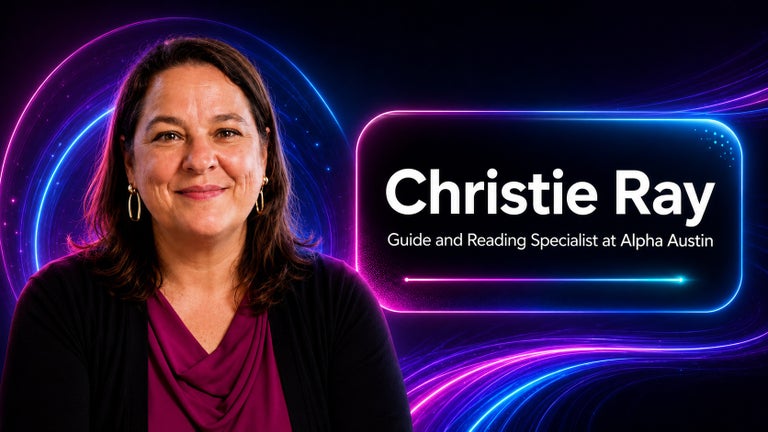
Here’s Christie Ray’s - Guide and Reading Specialist at Alpha Austin - parallel framing to MacKenzie’s:
“Every kid’s prescription is different. You go to the doctor, and they look at your symptoms, then they treat you. They don’t put everyone in a field and say, ‘You might have diabetes, so you go over here too.’”
That’s what real personalization means. Not letting every student wander. Giving everyone the specific path they need to reach their highest potential.
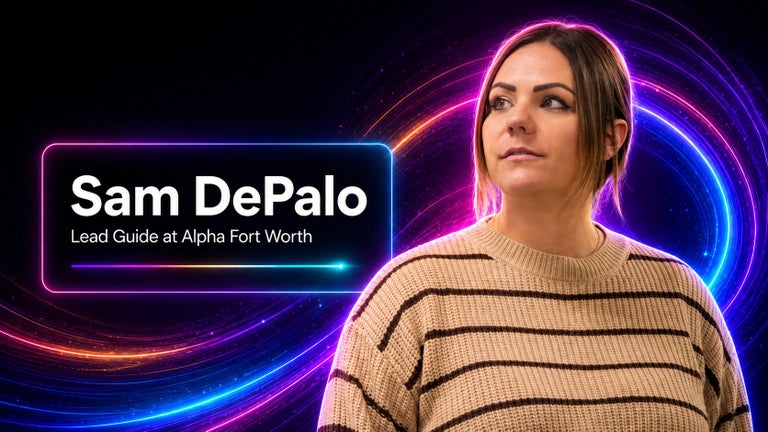
Alpha has internalized that high standard. Sam DePalo - Lead Guide at Alpha Fort Worth - points to the bar Alpha students are expected to clear:
“At Alpha, students have to master 90% of a grade-level curriculum before moving on. In most public schools, the bar for mastery is 75%.”
That combination of individualized path and non-negotiable mastery is why Alpha students learn at 2x speed while ranking in the top 1-2% nationally across all subjects - language, math, reading, and science.
The best AI classrooms don’t lower the bar so more kids can clear it. They personalize the path so more kids can meet a higher one.
The Future of AI Learning for Kids Is Human
AI learning for kids doesn’t work because AI powered software is impressive. It works when the model around the software is honest about what children actually need.
They need the right academic path. AI can help deliver that faster, more personally, and with fewer gaps than the traditional classroom can manage on its own.
But they also need a reason to stay with the work. A standard worth reaching. A person who notices when they’re coasting, hiding, rushing, shutting down, or ready for more.
That’s the pattern running through every expert insight here.
Motivation becomes the bottleneck. Knowledge remains the foundation. Personalization only matters if it leads to mastery.
The schools getting this right aren’t choosing between AI and teachers. They’re using AI to take pressure off academic delivery, then putting expert humans on the work that decides whether learning actually happens.
Tired of the panic-or-magic conversation around AI learning for kids? Our partners are looking for AI-forward professionals ready to redefine the AI-human future of education.
Similar post


Want to read more?
We have a lot more where that came from


 AI-first education leaders.